One Tree
The guidelines for sustainability?
There are no guidelines, no rules, other than do no harm. While there are many ideas being suggested, we all have to find the way which works for us.
But the time is now. It’s already late.
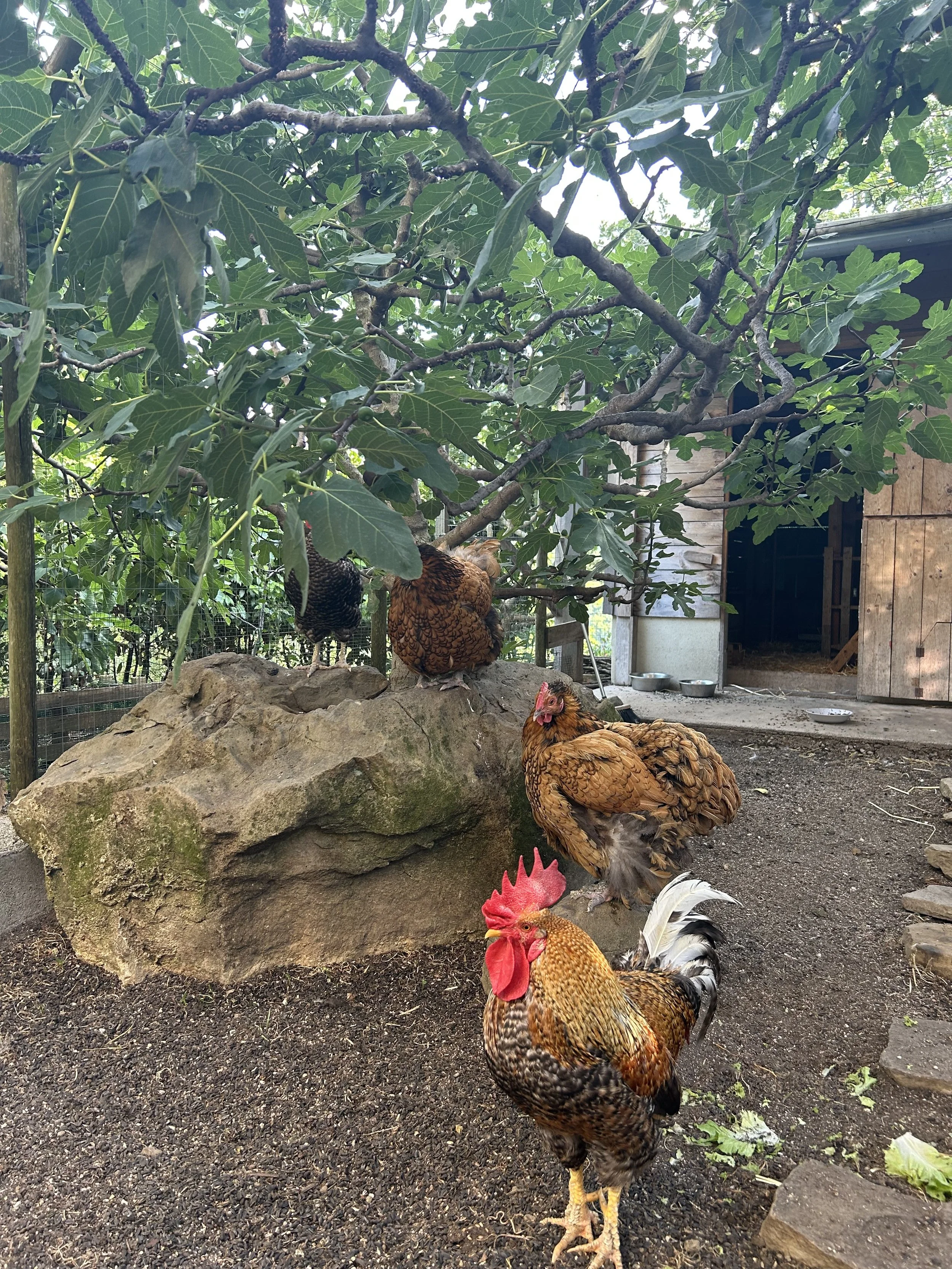
Where do we start—whether we wish to grow some of our food or simply lessen our personal impact on our world? I began by planting a tree. One tree. The tree in the above photo.
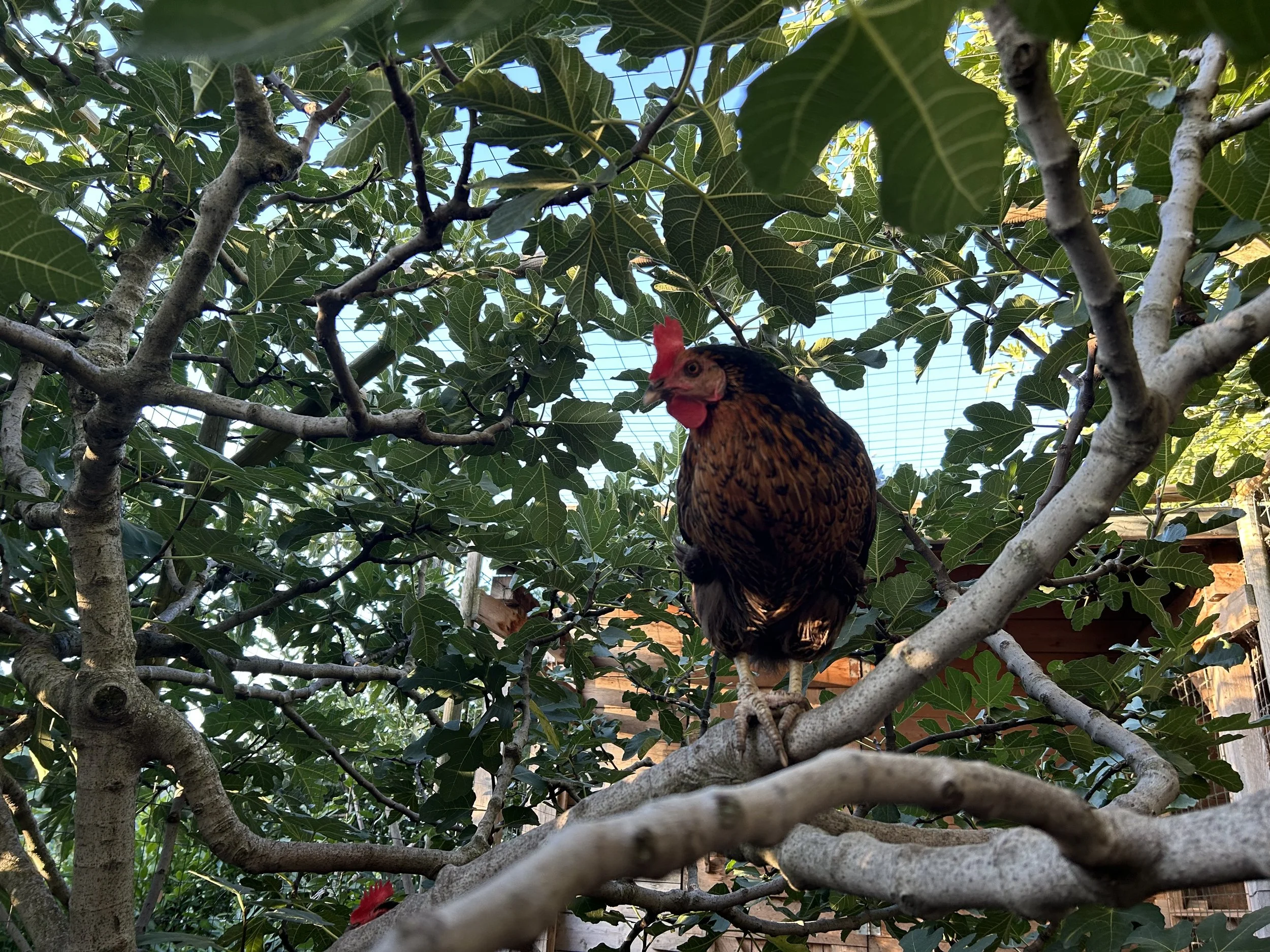
Tree planting is not solely about offsetting our carbon footprint... it takes years for a tree to become a significant carbon sink. But planting a tree has many ripple effects—whether it restores a habitat, provides shade and cooling, creates new sources of food, prevents soil erosion, or regulates our water. Planting a tree is about planting beauty. Planting a tree is a gift to future generations. For me, planting a tree is where every one of my gardens begins.
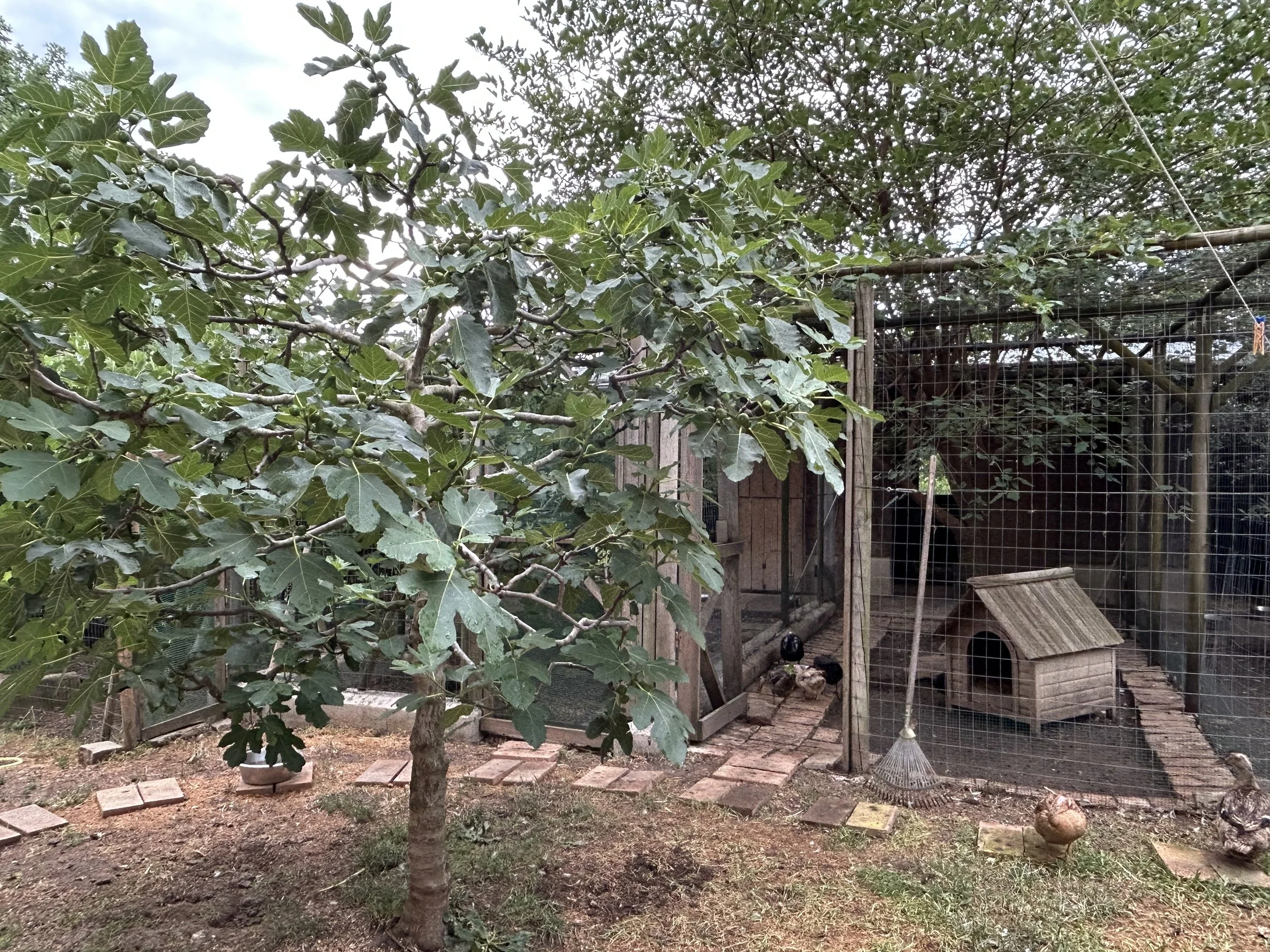
A black fig tree in front. A mulberry tree in the back. Both began bearing fruit within a few years.
It’s early July and 36 degrees C today. As I give the ducks a large dish of cool water I silently congratulate myself for having planted four fig trees as well as an olive and a mulberry tree in front of their barn. All are impressively large and robust ten years later. The trees give the poultry much needed shade as well as juicy fallen fruit during the hottest part of the summer.
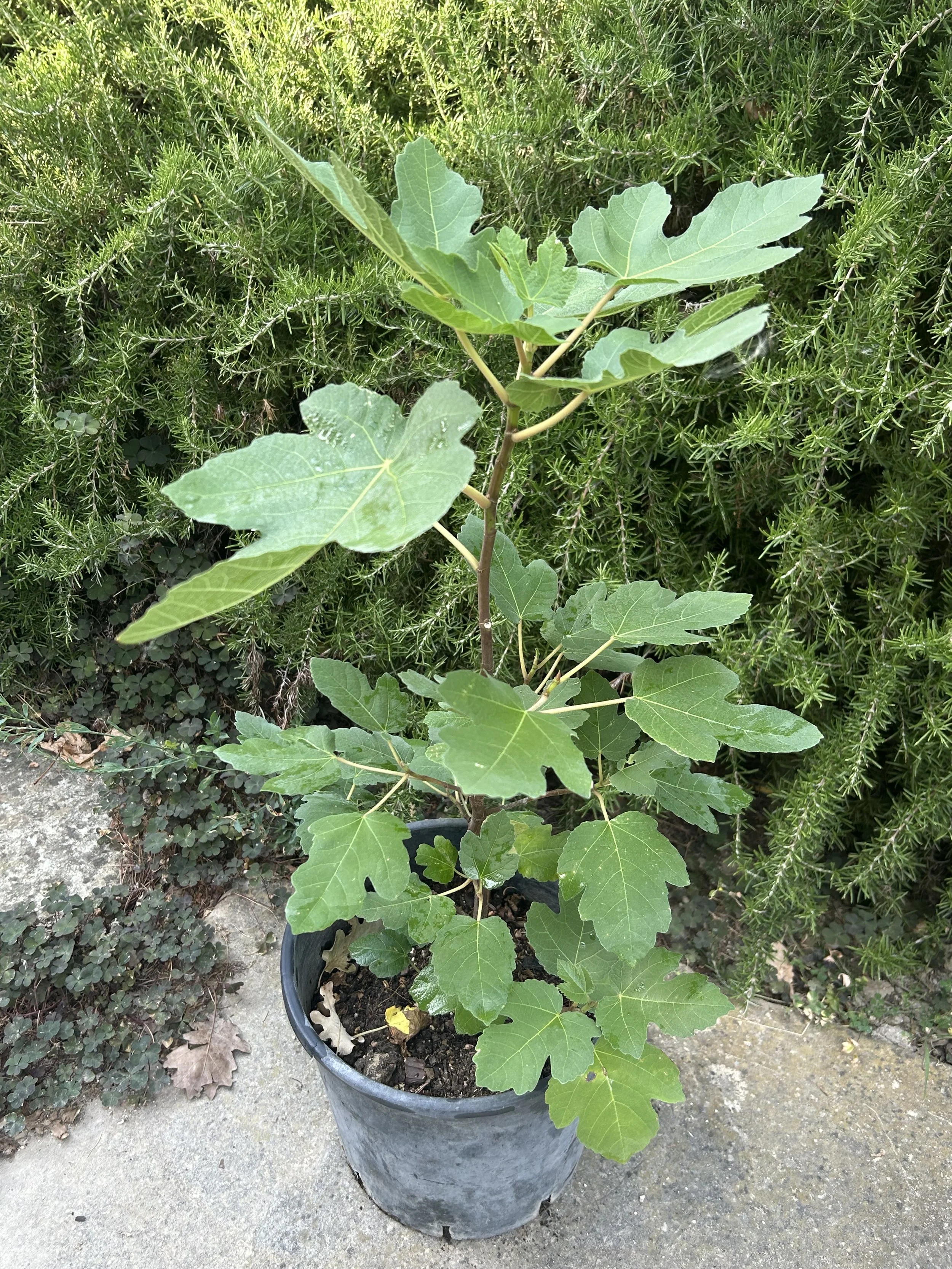
It was only by accident that the first thing I did was plant a tree. A year before I was eating black figs at a friend’s house. The taste was on an entirely new level of food sensuality. Drunk on deliciousness, I asked if I could take a cutting from his fig tree. My friend said 'even better, take a sapling with roots. There are plenty growing out of the base of the tree'. I did. I brought it back and planted it in a pot. By the time we arrived at our new home, we had a potted two meter-high fig tree in need of more growing room. (She has since birthed scores of black fig trees.)
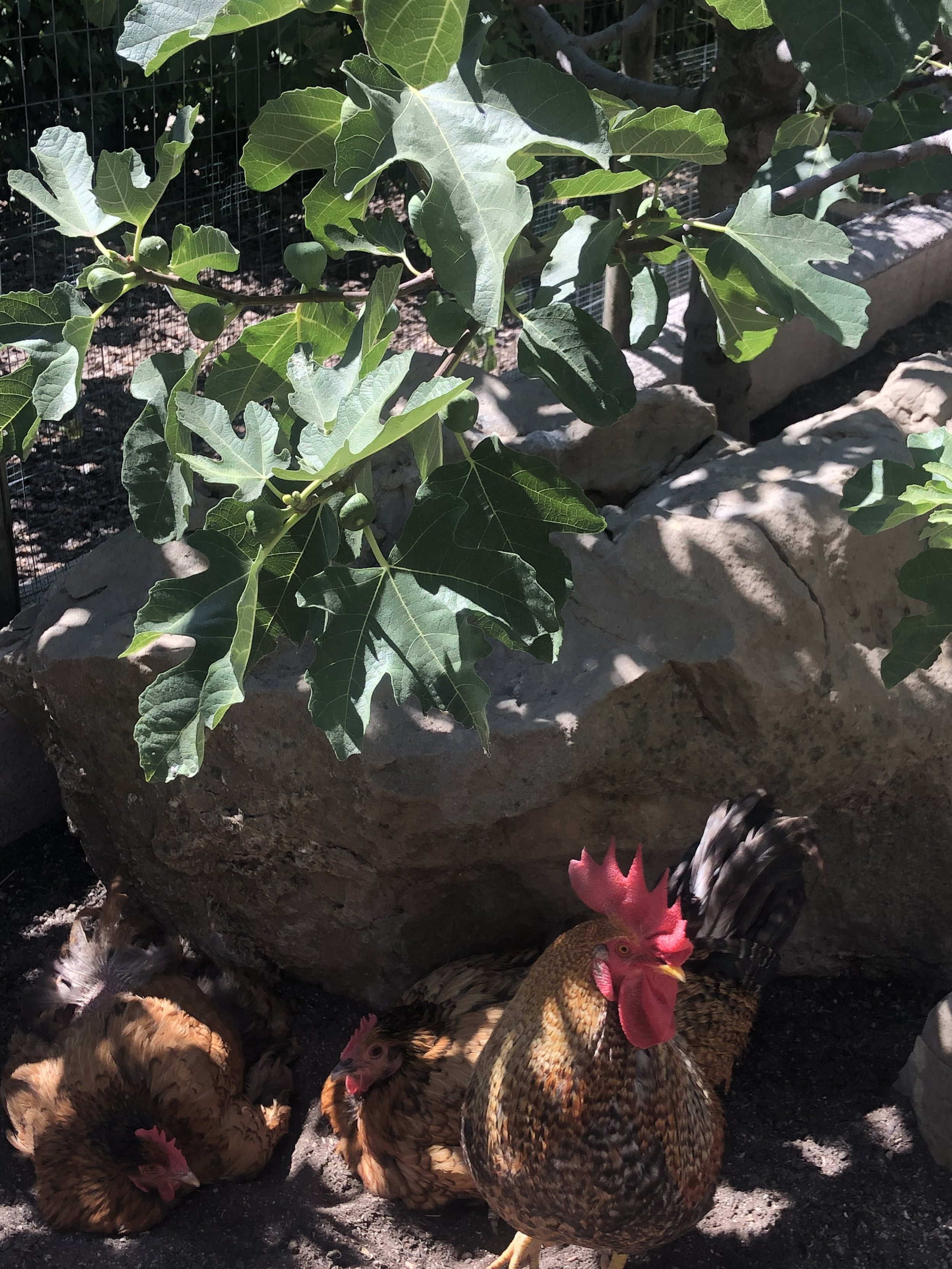
The fig tree outside the barn provides shade all day in the summer. But, because it is deciduous, the leaves drop in the fall and there is warming sunlight for the chickens all winter.
I did not know anything about our soil type but I saw that wild figs were common throughout our valley. Because the land had been excavated to build the barn—it was rock and clay—I had no indicator weeds to guide me. We dug a very large hole and added a garbage can-full of just slightly acidic pH compost—a meal specifically tailored to a young and growing fig tree.
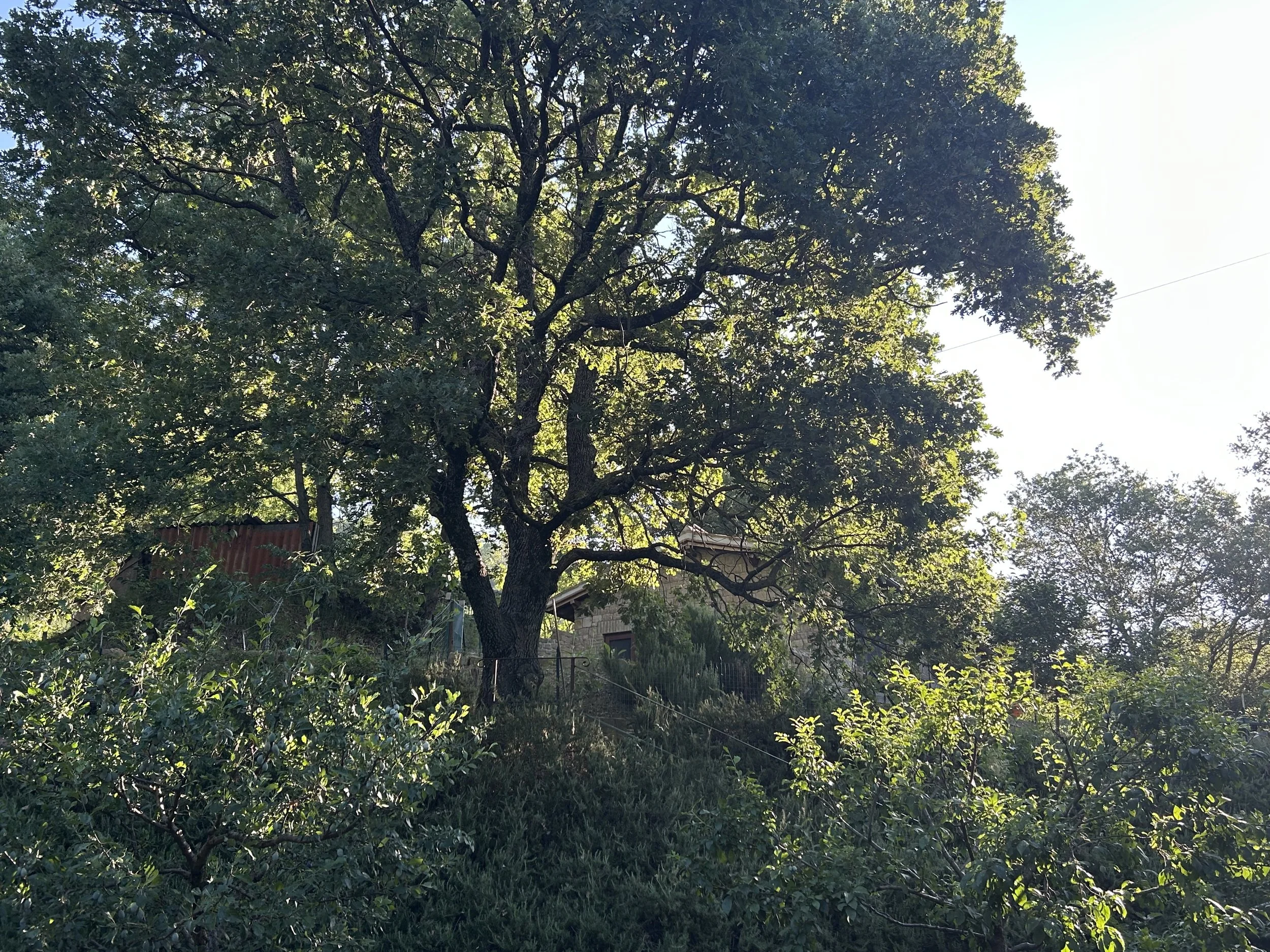
When a house was built in my village (hundreds of years ago) oaks and pines were planted on the northwest side of the house. The trees provide an essential buffer from the strong winds and baking afternoon sun. (Above)
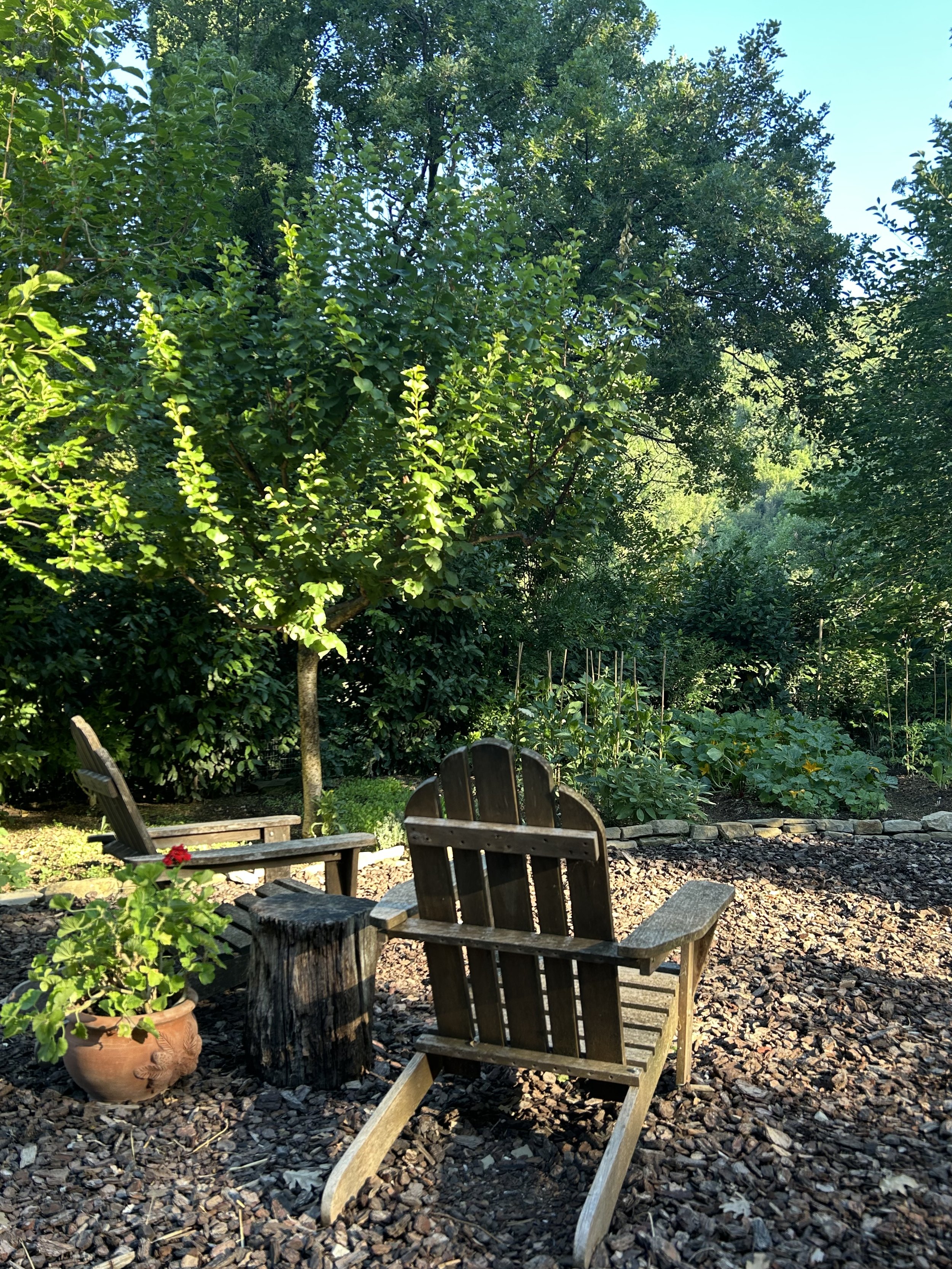
An apricot tree in the foreground. All the trees, except the tall oaks and cypress in the back, were planted when we first moved in, before the garden was created.
A tree will hold the soil during our torrential rains and share its moisture with the surrounding vegetation during drought. And when the tree is cut (by coppicing, a way in which it can regrow) it heats our home and cooks our food. Inspired by John Russel Smith who wrote Tree Crops, I now grow our food within scattered trees. Not a food forest; just enough trees to provide some needed shade for the crops during our hot fifteen-hour summer days. Our trees provide us with nuts, olives, oil, and fruit but equally important, they also provide food and housing for the wildlife. And housing for the predatory birds and insects which control the bugs which might otherwise decimate my crops.
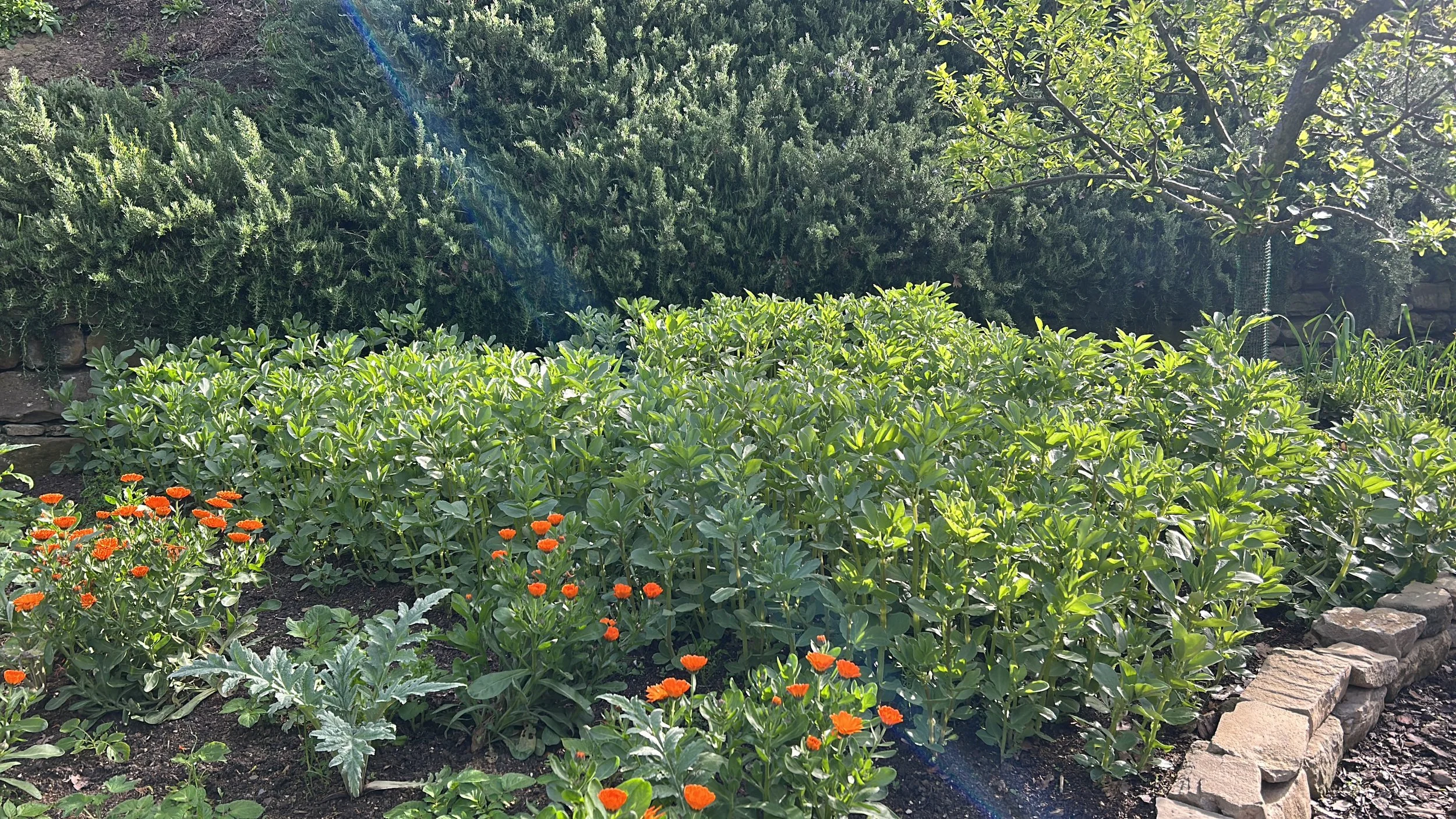
A plum tree anchors the entire community. Rosemary plants (back) hold the hillside from erosion.
Now, for every new area I cultivate, I begin by planting a tree. But before I touch the soil, I sit with the land for a while, noticing all the plant species, the visiting birds and insects, the movement of the sun and the wind. And then I scratch around in the soil to get to know it's texture. When I am ready to place the sapling in the earth, it will be because it is suited to its new neighborhood and will be able to establish roots for a new community.
© www.subversivefarmer.net July 2026