Enough Water <em>Part I</em>
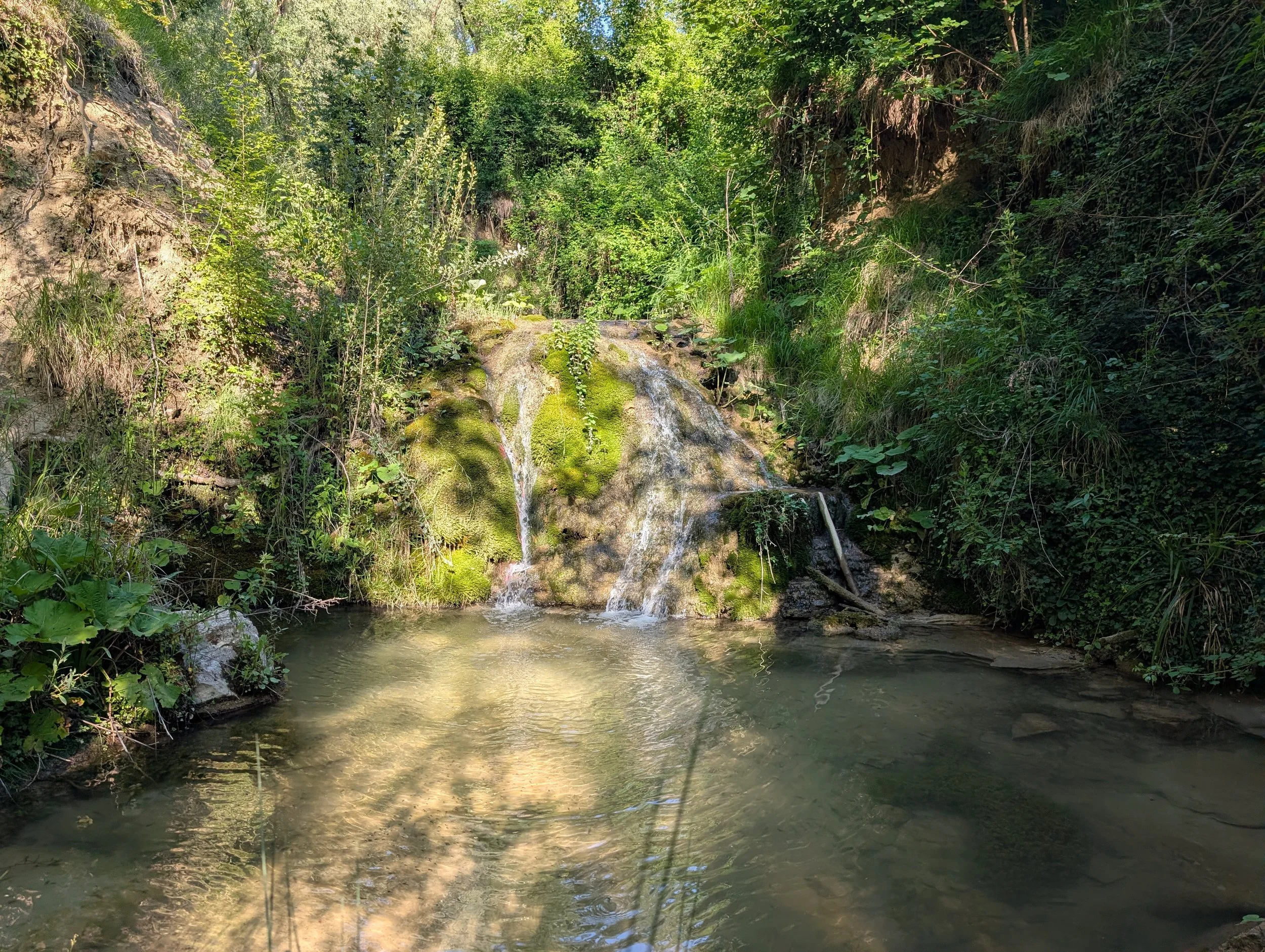
Accelerated, human-caused global heating and a supersized El Niño have scorched fields across Europe this summer, with plant development prevented by temperatures routinely exceeding 30C and often 35C, almost no rainfall, and hot winds. The Guardian 17 August, 2026
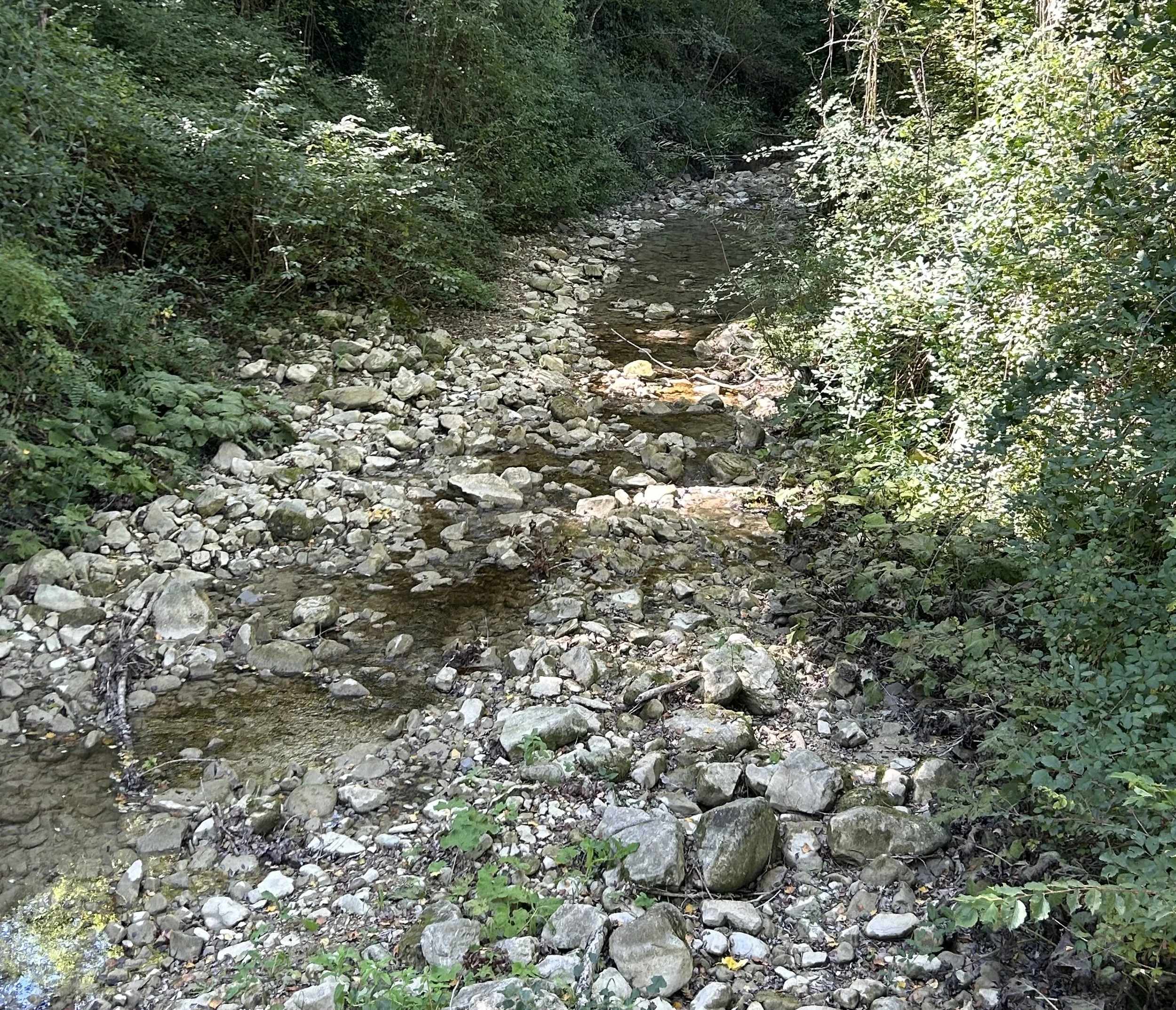
For almost a month the outdoor thermometer has registered 36° C. Truly unchartered waters for my region. The chickens are panting. (Yes, chickens pant when they are hot.) Since the beginning of July our work as farmers has been all about water conservation. There has been enough rain but the demand is much greater. The river is running dry. (Above) Now, in August, half of all the food on which we depend is being harvested. Not just our summer vegetables and most of our fruit but the hay we feed our donkeys. The hens who lay our eggs, our protein, need even more water than usual. And we have fourteen chicks on whom we are counting for our winter eggs. (Older hens do not lay in cold weather.) The food we cultivate is 90% water, taken up by the plant roots from rain-saturated soil. Our favorite August Delight—our black tomatoes—are 95% water, without them it would not be summer. Without water, there would be no tomatoes. With the unanticipated intense heat, I cannot farm as I have in the past. From day to day, I have no idea what the weather will be. And the meteorologists haven't a clue. Uncertainty reigns. And when it does rain in this heat, hail is a concern. I needed a new plan for cultivating our food, something far more flexible... and dependable.
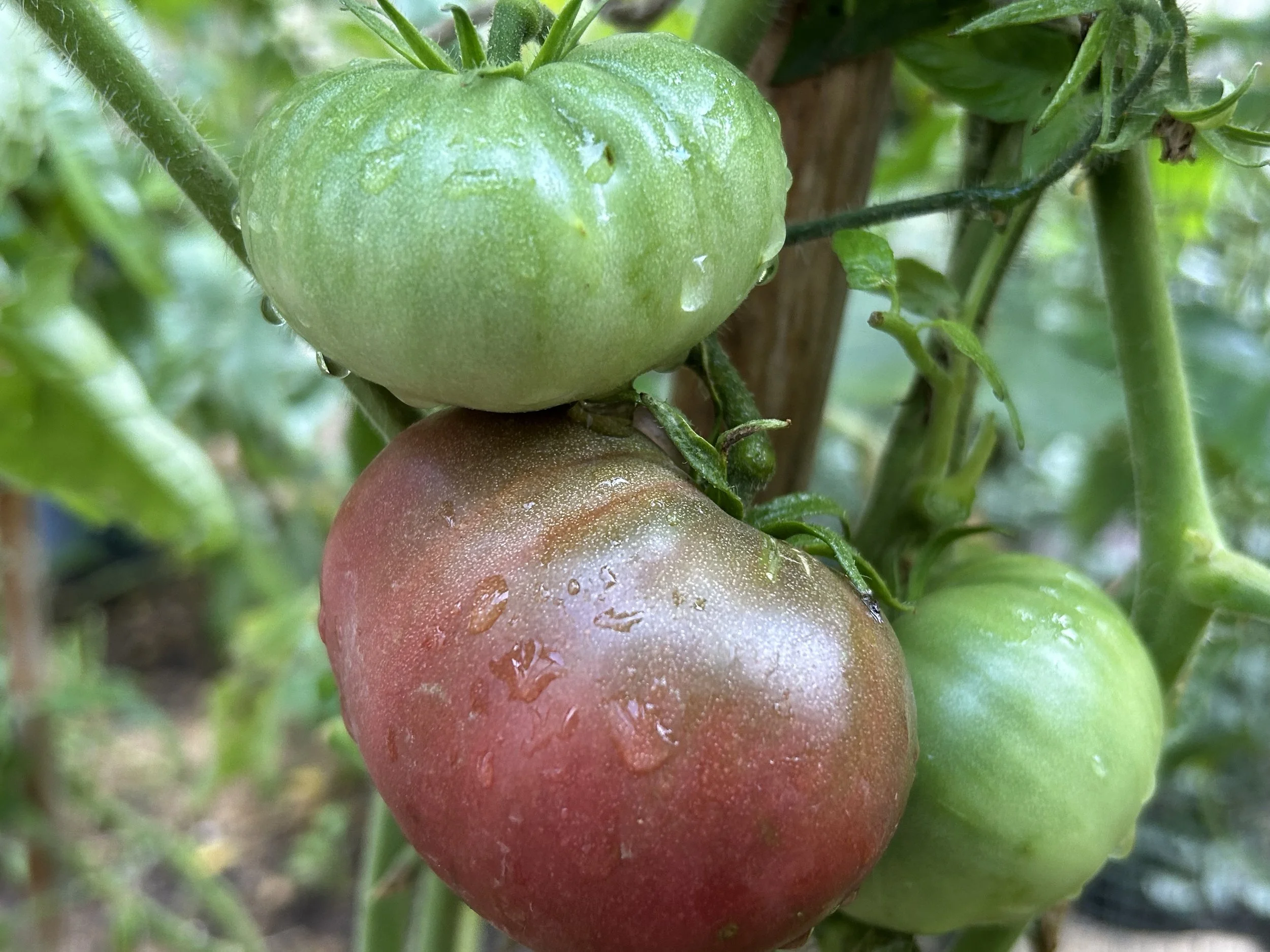
Tomatoes 95% water
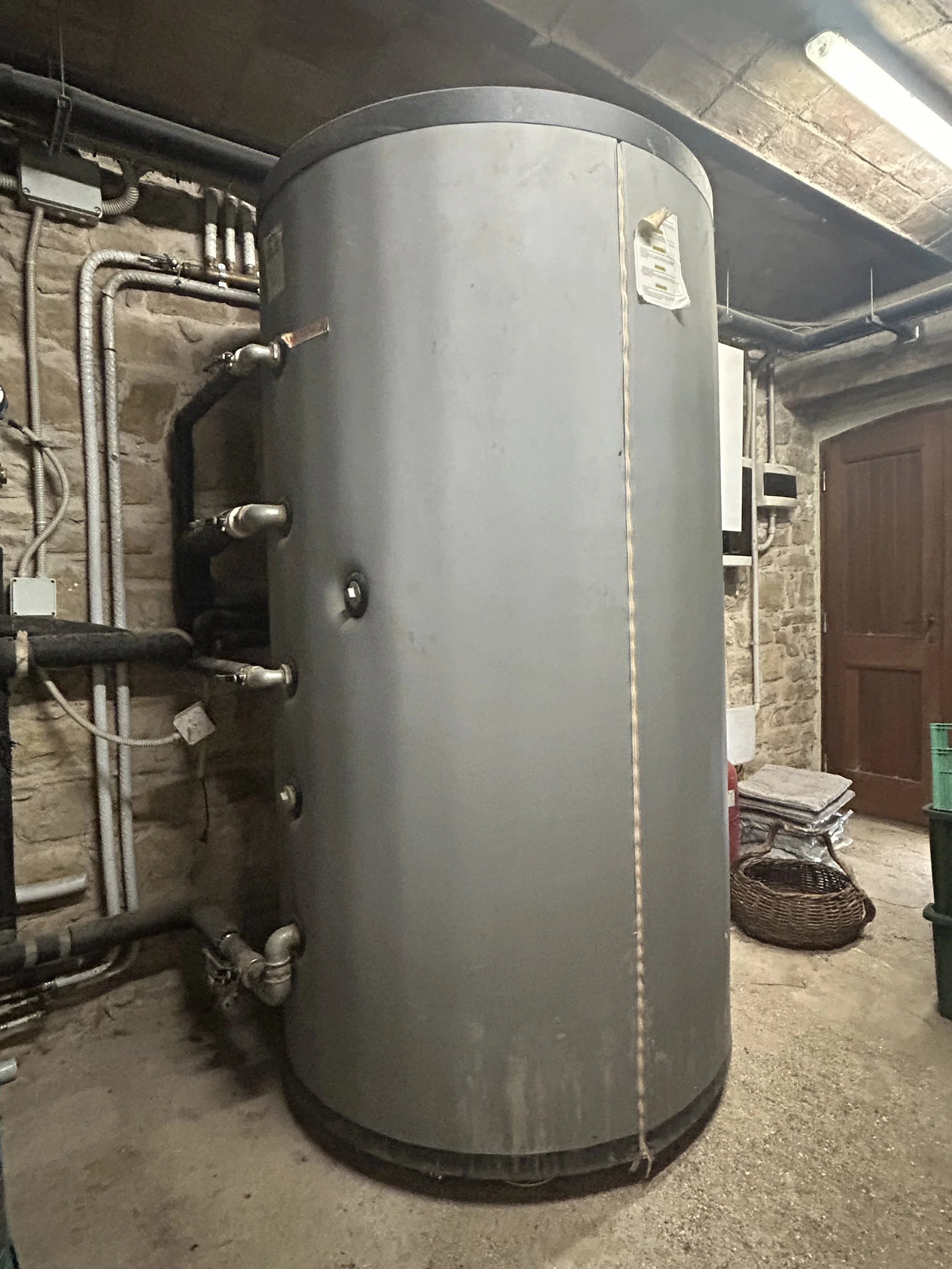
Our first baby step was to prepare for a water emergency. Given the predictions of increasingly high temperatures and the inevitable accelerating demand for water, we knew that we could not depend on city services for our water. But most of us have a backup water supply available to us. Our homes generally have a tank of incoming municiple water somewhere in the basement or a closet. It may be for hot water. When we moved to the mountains our plumber insisted we have two stainless steel water tanks installed. Huge tanks. It was not an environmental action, it was about personal resilience—having enough water if the supply was suddently shut off. 2500 liters of backup water. We considered it a necessity, not a luxury. Anyone can do this. Even in an apartment.
But storing city water is not the same as reducing our dependency on an environmentally expensive and wasted resource. There is another action we all can take which protects us and our natural world. REDUCE OUR CONSUMPTION... of everything connected with deforestation, water-degrading and water-intensive practices. This can be done by harvesting rainwater; we can irrigate our gardens, while also having a backup water supply for the household. Any building with a pitched roof and gutter will do. Any apartment window or balcony with an awning draining into a container can collect rainwater. Water can be stored right where it is collected. And, if you are living in a single family house, by the simple addition of one pipe the sewage water can be routed into the land beneath the house, recycled back to earth, back to the local environment or into the garden growing your food. I have written about cisterns many times. Most recently here.
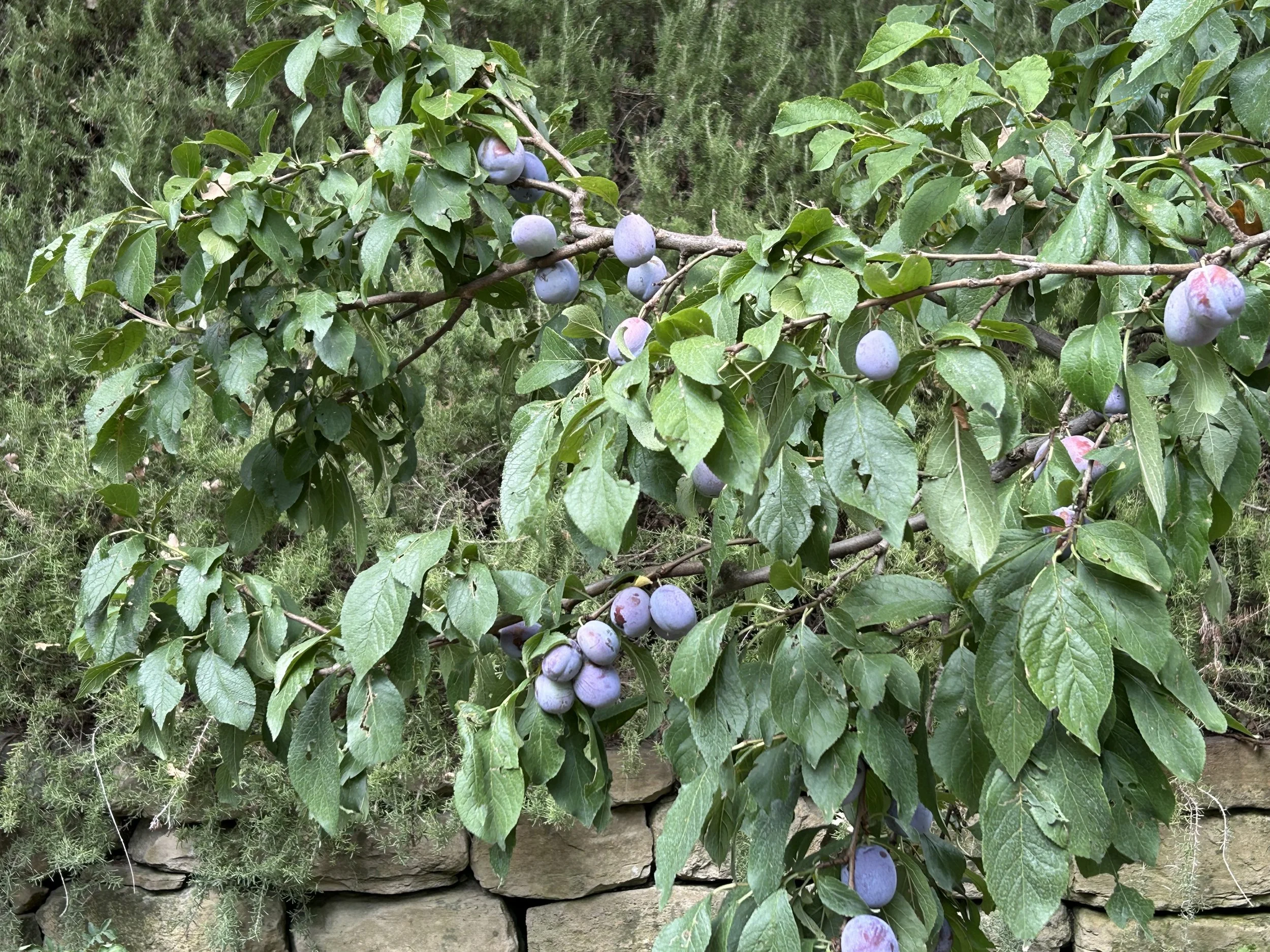
Plums 87% water
When we were looking at land on which to farm self-sufficiently, we bought hillside property in the mountains, land bordered by a small river with a well. I knew I could build ponds for water storage (permaculture style) and the well seemed more than adequate. There was, and still is, heavy rain in spring and fall. But our first summer here the well went dry and the pond did not hold water. We would not have enough backup water to get through a drought. We needed to collect the rainfall when it came. One hard rain for a minimum of twenty minutes, collected from the roof of our house (130 square meters), deposits 25,000 liters of rainwater in our cistern and lasts us one hot dry summer month.
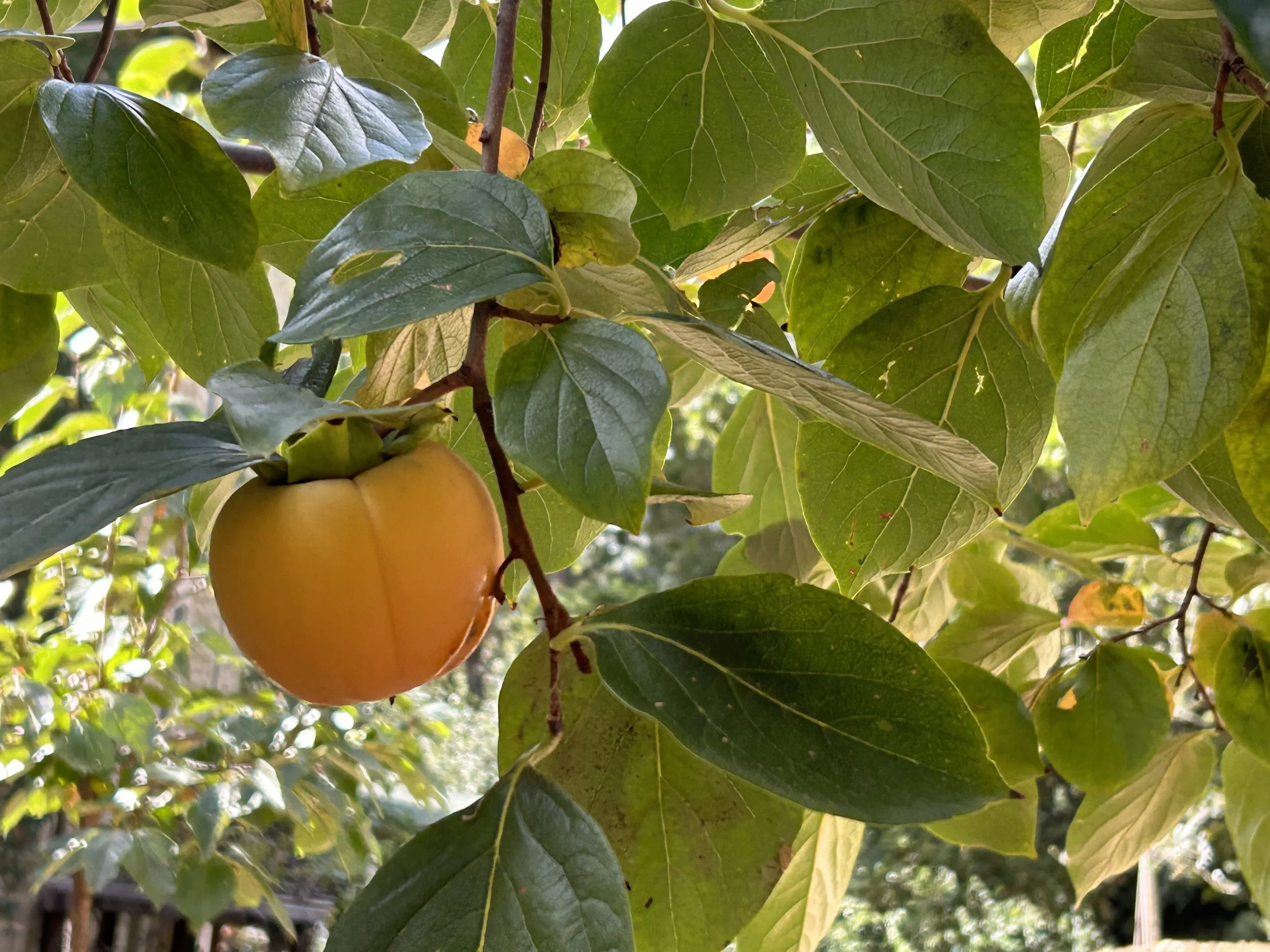
Persimmon 80% water
Our largest cistern, in cement. was costly, though not as expensive as stainless steel. Around eight thousand euro. But, like the water tanks, we consider it a necessity. That money was health and fire insurance as well as protection for our food and income; perhaps the cisterns—we have numerous ones all sited at our barns and gardens—may be our only water source in the future.
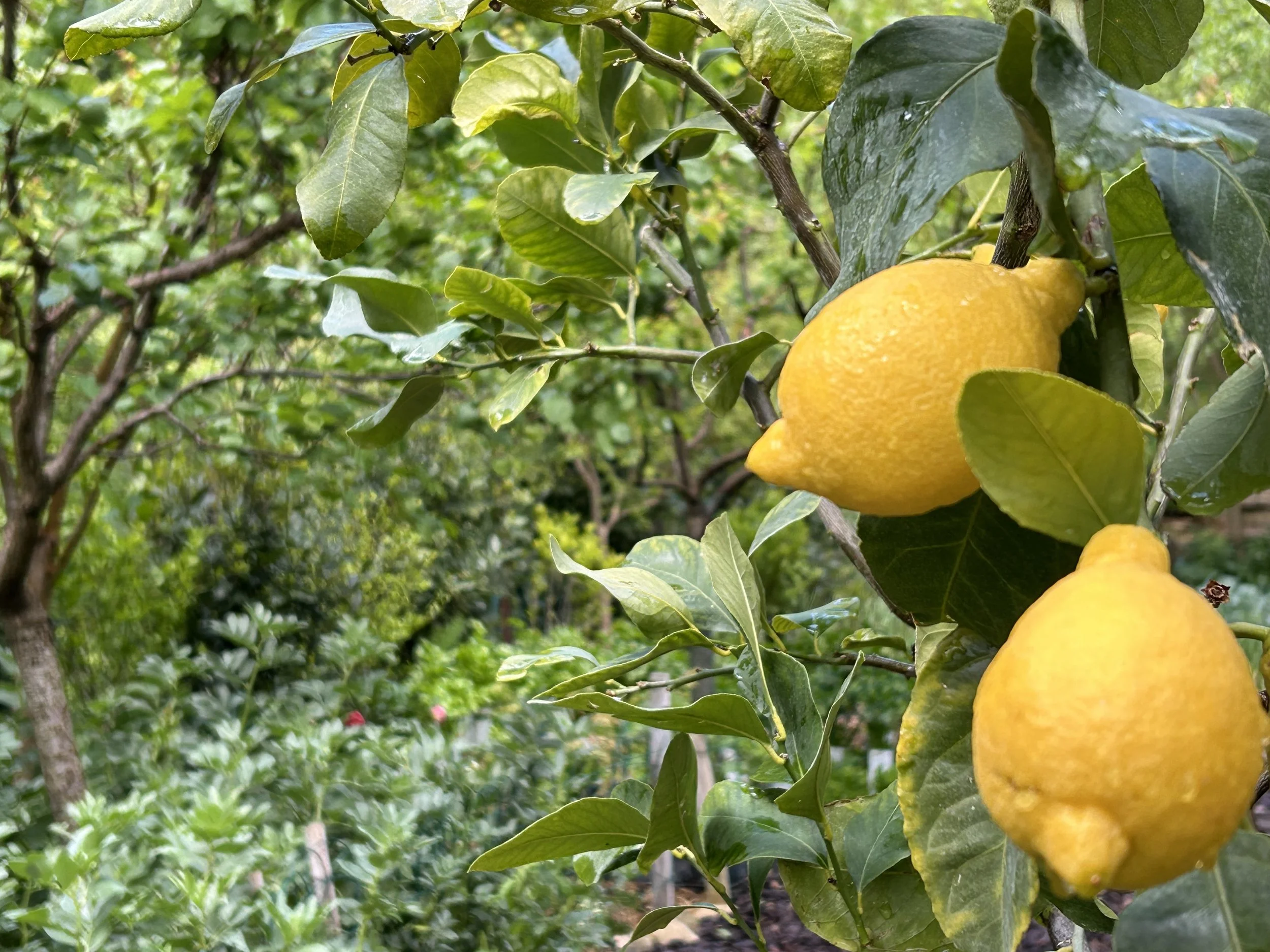
Lemons 89% water
New gardeners ask what is most important first step in planning a garden. After this summer, my answer is simple ... the amount of available water will determine what and where you can grow anything. Before I dig a new garden or just plant a few trees, I must know from where my water will come and if I will have enough when I need it. To avoid more expense, it is ideal if the garden is located near the water source, often near the house. How much one can grow, what can be grown and where will depend on the quality of the soil, the amount of sunlight, the temperature, and the available water. I can improve the soil at no expense by fertilizing it with my own waste if necessary. I can cut down trees or plant them to take advantage of or minimize the sunlight. I can grow in the fall and spring if the summer is too hot. But I cannot conjure up water. Water is the limiting factor. It always was. I can farm only the amount of land which I can irrigate.
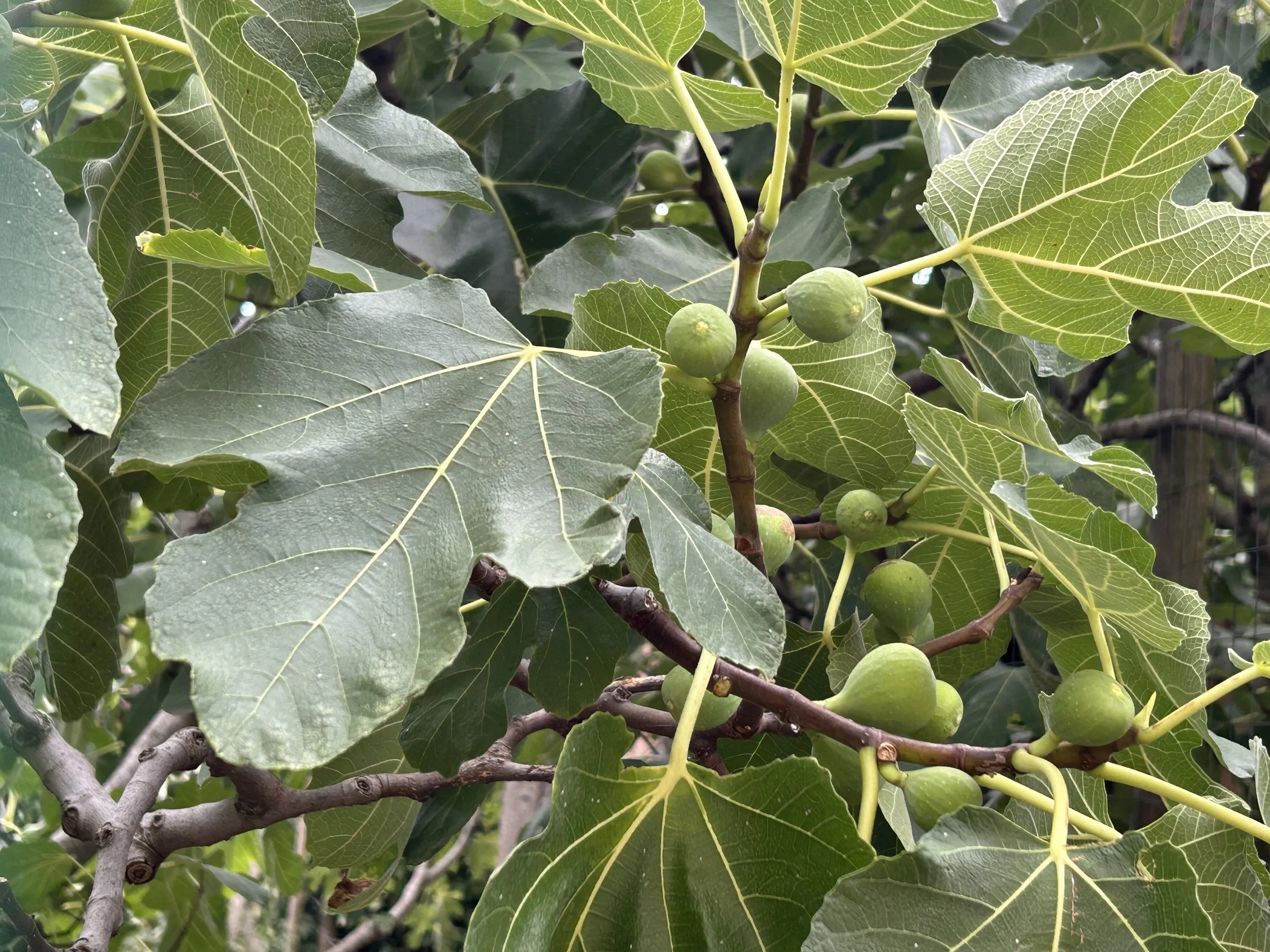
Figs 79% water
I am attracted to the ideas of Alan Chadwick and John Jeavons, a combination of ancient Chinese agriculture with twentieth century biodynamics. I plant intensively—on every bit of available earth, in slightly rounded deeply dug garden beds. No raised beds, no drip irrigation. I often mulch the taller plants by running low vining ones between them. An edible ground cover which keeps evaporation to an absolute minimum. I try to cover every bit of ground with plantings, expect for the paths on which I walk. Then I irrigate the entire soil ecosystem. I want to keep all the soil alive for optimal nutrient transport and exchange. So I water with a hose, watering like rain. It is a meditation as well as the perfect quiet time to check in with all the plants, see how they are getting along. It's when I troubleshoot.
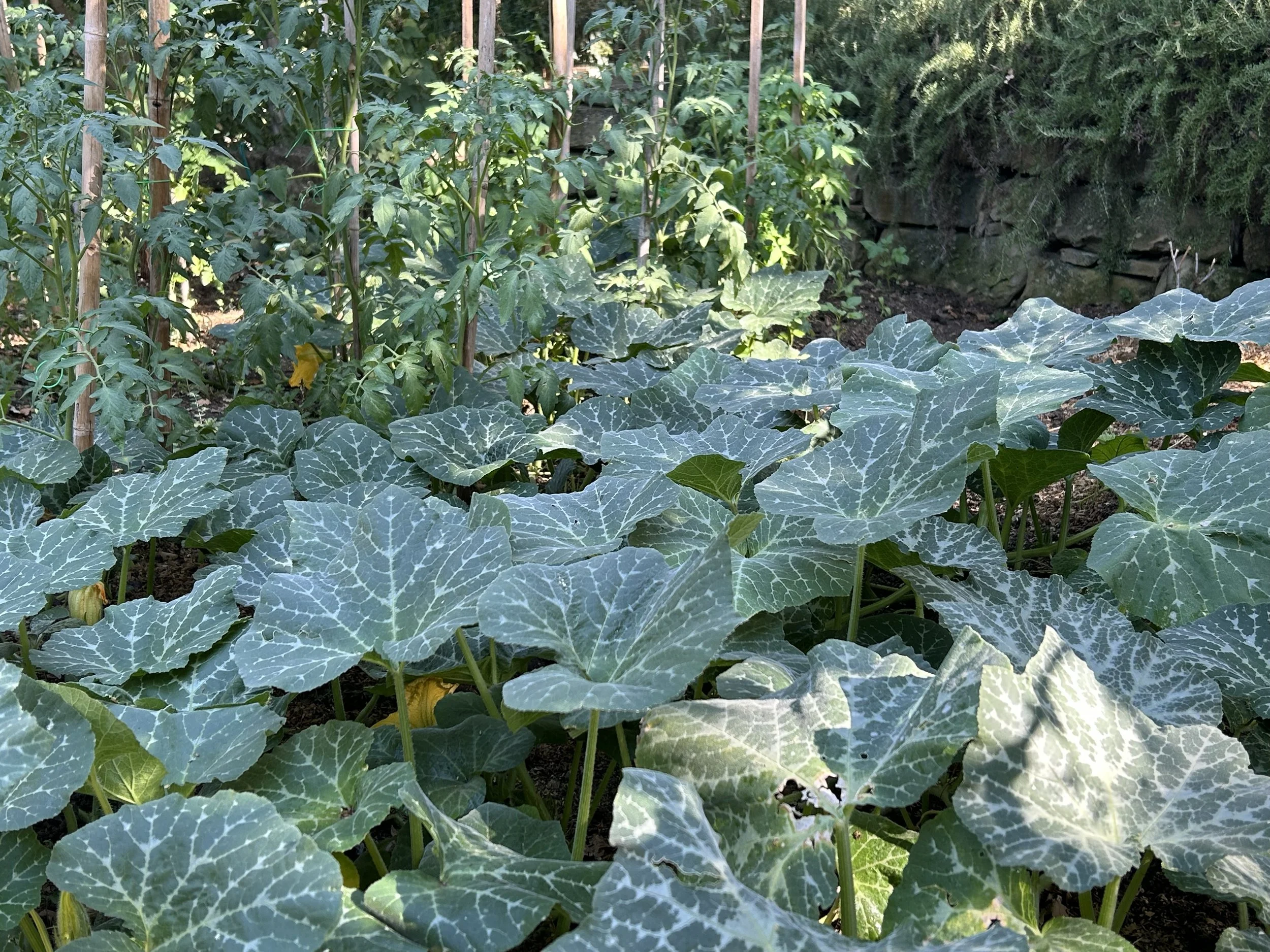
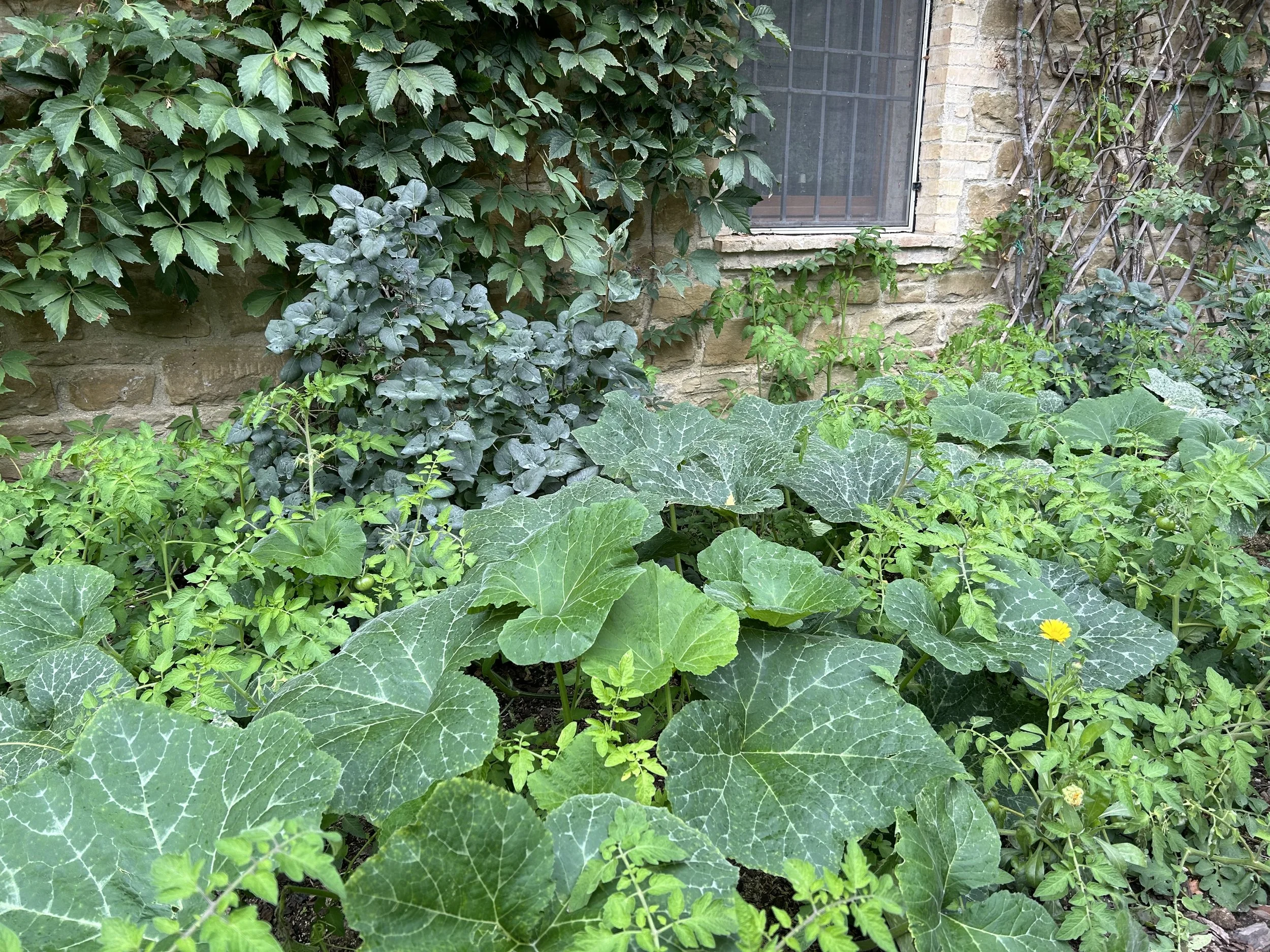
Squash plants between tomato plants. Living mulch, all of the ground is covered.
I am also take cuttings from every single plant bearing the most luscious fruit or vegetables in the 36° heat. These are my El Niño success stories. If this heat continues as predicted (with no winter) the tomato and pepper and squash cuttings will be replanted in the gardens once they form roots. If we move into a real fall, their seeds will be planted out in spring. The fruit tree branch cuttings will overwinter in pots outdoors.
The more rainwater I save, the less I strain the public resources. The more rainwater I save the more secure I feel. If americans have learned anything in the last two years it is that the laws and the constitution will not protect them. If we wish to have enough to live comfortably in what looks like bumpy times ahead, we need to plan. No one knows what is coming next. All the countless heat and rainfall and drought and flood projections have a significant degree of uncertainty for specific regions. But there are actions we can all take which reduce our demands on natural resources while protecting ourselves and our families regardless of what the scenario will be.

Our dog Scruffy 60-70% water
© www.subversivefarmer.net August 2026
Appendix
Tomatoes headline every meal. Breakfast is thick slices of tomato on toast which has been slathered with our homegrown mayo. Gazpacho—cold tomato soup—for lunch. Panzanella at dinner—an Italian tomato, bread, basil, and cucumber salad. We irrigate twice daily, relying on rainfall. Stored over months.
Gazpacho Soup.
In the blender, then refrigerated:
At least five large tomatoes—95% water
1 bell pepper—95% water
1 cucumber—95% water
4 raw eggs—76% water (immerse them in boiled water before using)
¼ cup of olive oil—3% water
¼ cup of vinegar—97% water
a handful of basil—11% water
salt—none.