FINDING HOME <em>PART I: WATER</em>
My Intention:
I am using the title, Finding Home, to zero in on what may become critically important during this time of enormous confusion, uncertainty, and increasingly limited resources. What would make us feel as safe as possible? What do we need for grounding and stability but also joy and well-being? The first three categories are water, food and community, basic needs of our entire primate order for seventy-plus million years.
I loved the excitement and the cultural richness of my life in Chicago and later Manhattan and Washington. But, to stay in the city and fight for everything I believed in, while trying to live sustainably was exhausting, requiring more stamina and faith than I had. I left to simplify, live closer to the earth, and depend more on myself. I learned self-sufficiency from my neighbors; they taught me how to support myself financially, socially, emotionally.
Learning what we need
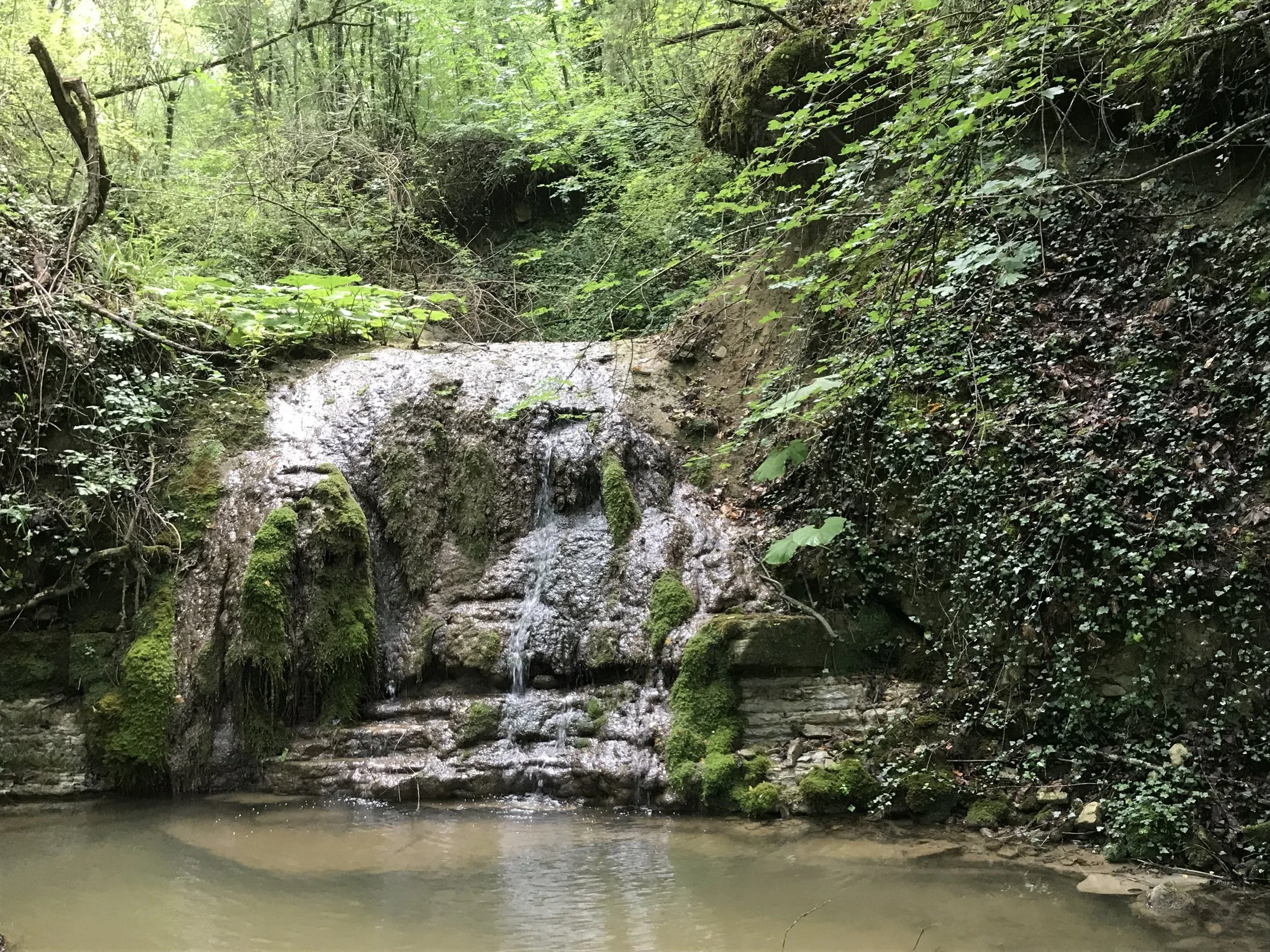
When I was twenty-one, I spent the summer camping in the western United States. In national and state forests. We brought our dog, a tent and sleeping bags, canned food and instant coffee, a pot for cooking and boiling water and a grate to put it on. We had a change of clothes, heavy jackets, sturdy boots, matches, flashlights, books and maps and a first aid kit. We checked in at the ranger station when we arrived at each area. We pitched our tent at spots we found along streams and rivers. Phil attempted to fish for our meals but really, we ate mostly canned chili. There was plentiful downed wood for a fire. The memories, those which remain, are of the natural landscape; an immense sky and the sight of a massive approaching thunderstorm from many miles away. The power and beauty of the land: the mountains, the dense trees. And the pure water. Water from a running stream; water we could drink. Delicious. Always plenty. Being in the wilderness felt deeply familiar, nourishing. That summer felt like having a full stomach all the time, never once feeling hungry.
I live within a different forest now
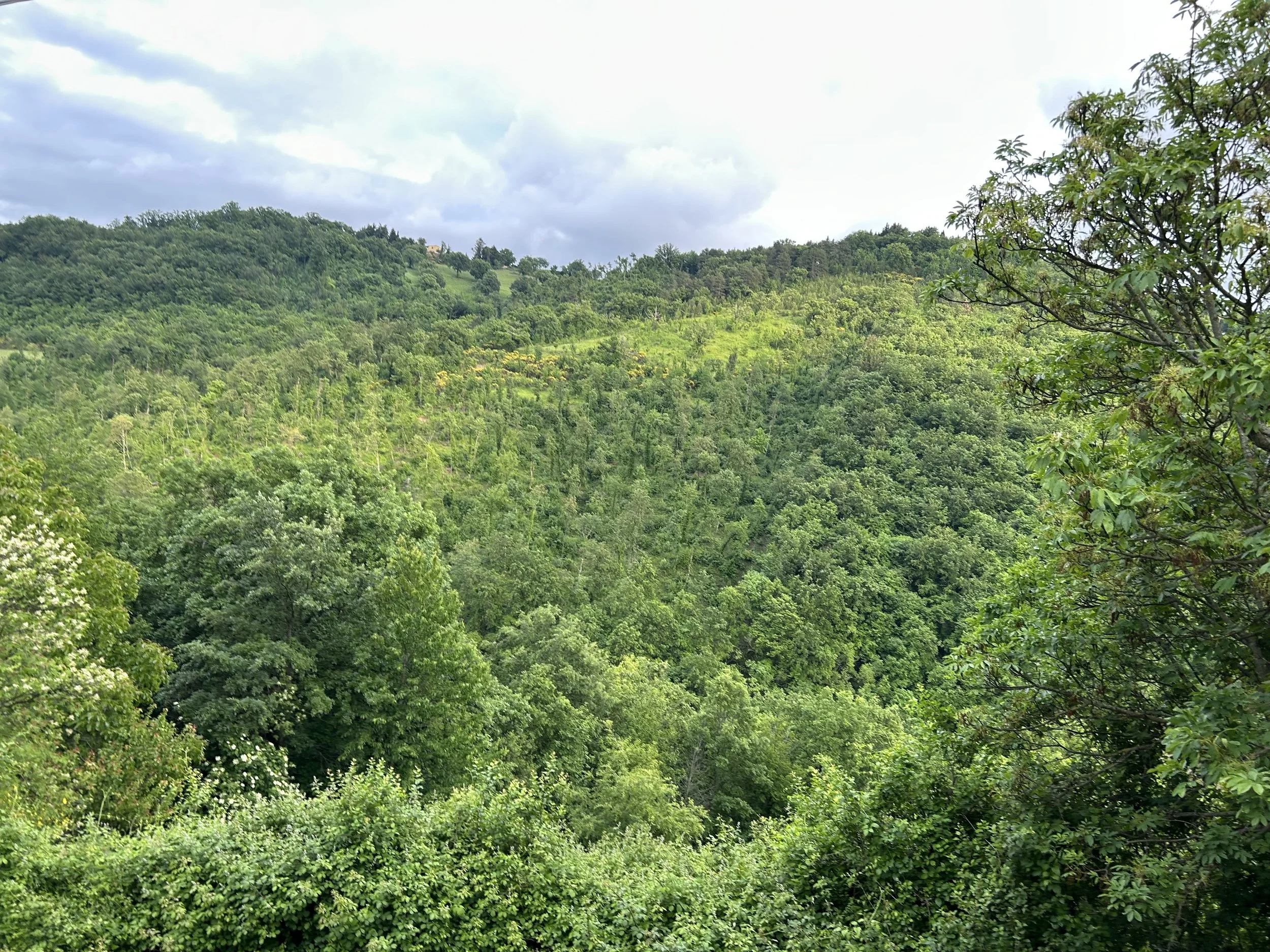
I live within a different forest now but with the same sense of awe, of fullness, the sense of belonging I felt when camping. To be clear, there are aspects of our lives in the mountains which are similar to the city. Our farm work is never done. But there is rarely anything urgent. Life is simple and slow in the country giving us the gift of enough time. Time.
Water is the #1 necessity.
In my thirties, we moved to a house on the edge of the city. I began to grow herbs in my front yard; glorious, fragrant plants. The garden was lush, enchanting. I hardly watered. I never fertilized. It gave everyone who entered the gate pause. I began to believe that I could make magic. Then, raw sewage began to back up in the basement. Water & Sewer came out to find that the problem began when the county switched from a septic system (ours was in the backyard) to a municipal sewage system. (This is the same one system, the same area, where the sewage recently poured into the Potomac River).
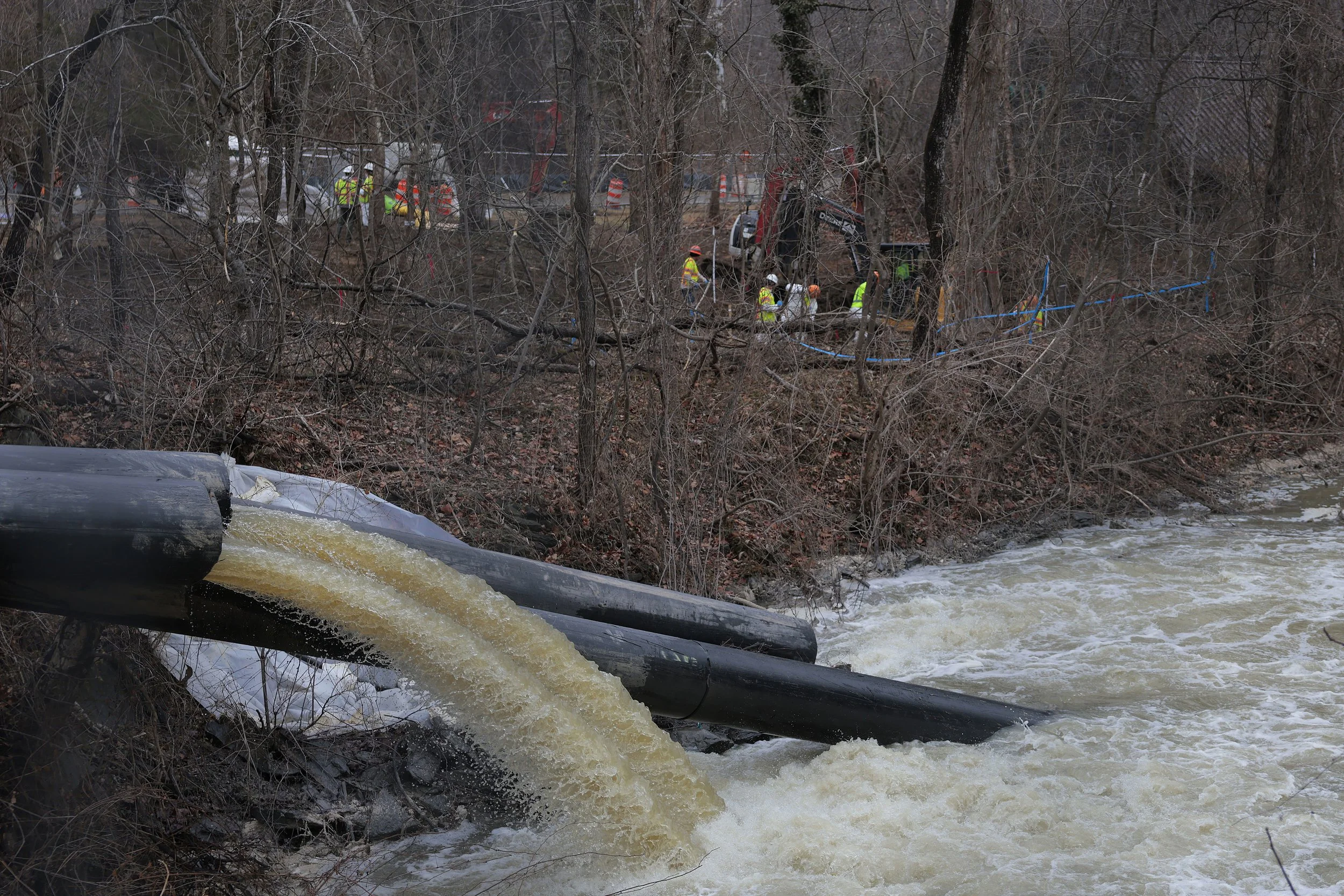
The recent February sewage spill in Washington D.C. Image from USAtoday.com
The pipes from our house, disengaged from the old septic tank, were never properly connected to the new municipal system. Our sewage ran from the basement into the ground. For several years, raw sewage was being deposited several meters below the ground, seeping into the front yard until the system was finally overloaded. The herbs were growing from our own (inadvertently created) compost. Water & Sewer then piped us to the main line—but I realized that, once broken down by soil bacteria, our household water and excreta were the magical ingredients for producing our food. And at no cost. Discovering that we squander this opportunity was one of those lightning bold changes in my life direction. It was too late (and quite illegal) to divert our sewage pipe a backyard garden but we could recycle all our household water. Our plumber, a close friend, directed the water line from our sinks and the shower to a holding tank for irrigation. The herbs—and then the fruits and vegetables which came later—were fed by the soapy water and the remnants from our kitchen garbage disposal. Fertilizers from continents away would be replaced by all our yard debris, all our kitchen waste (and later, all our excreta). (The Humanure Handbook)
Once we had moved to the country, it was a small step—really a penetrating glimpse of the obvious if I just slowed down enough—to think about how to provide our own household water. We started with a rain barrel—an antique wine barrel free for the taking from a nearby restaurant. It morphed into six one thousand litre tanks and a well. When we were inundated with far more overflow than could be possibly contained, we put in a cistern.
We all need water. All organisms. Water in a liquid state. There is no possible life on earth without water, the energy from the sun, a fertile substrate for plants and our oxygen-rich atmosphere. I put water at the top of my short list of essential needs, a resource many of us can provide for ourselves. Having a safe water source—for drinking first and foremost, then cooking, irrigating and bathing—is a beginning of taking control of our lives. At the same time, it is a giant step to ending the craziness of consuming, of paying for water.
One of the major limiting factors to city life is our dependency on water from a municipal system, or from water in one-time-only-use (endocrine and environmentally destructive) plastic. Outside the city, we have rivers and lakes and underground springs. We have wells. But every one of us, everywhere, has rainwater. Rain is free to collect, from gutters on the roof or an awning on a balcony or apartment window, which run into a container.
Collecting rainwater
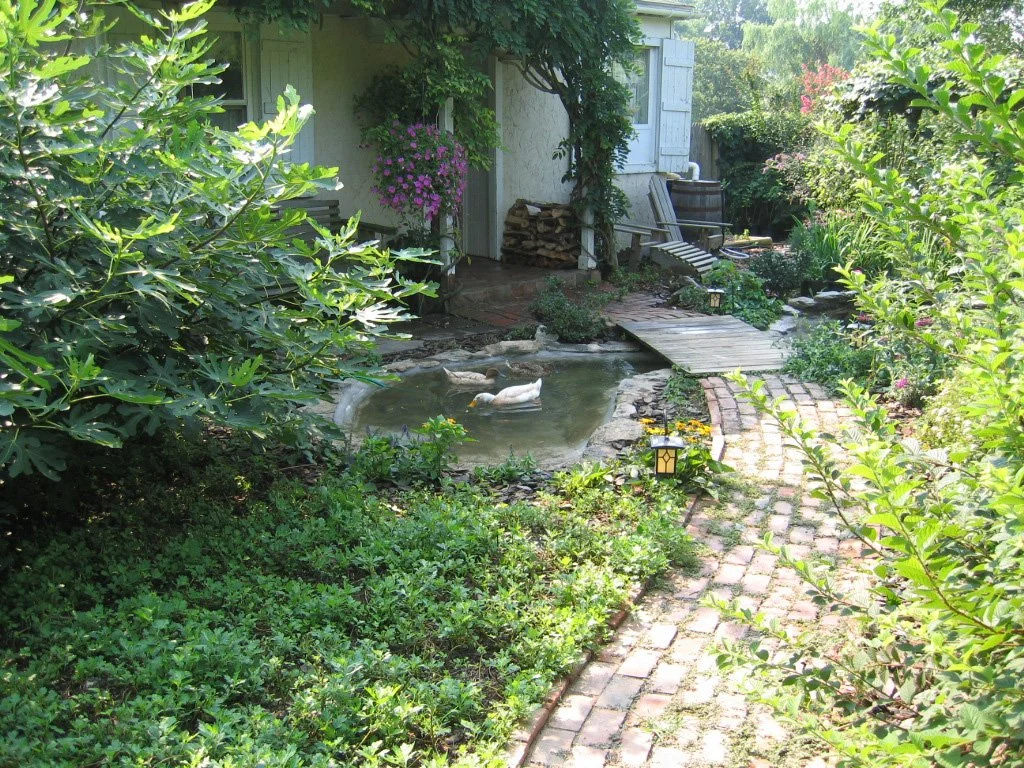
We started with a rainbarrel (upper right)
Harvesting water—collecting and storing rainwater, even just enough for an emergency—is a life-changing first step to independence from the grid and a reduction in the considerable energy needed to pump water from long distances away. Collecting water was the jumping off point from which our desire for self-reliance grew to providing most of our food and generating most of our energy. But even if it stops right there, even if I just collect my drinking water, I can make an impact and feel more secure. Not just during drought or when the system is broken but during our more frequent flooding.
Drought or deluge, they are equally destructive. Heavy rain or flooding can contaminate the water supply with anything over which it moves. As water floods over land, it erodes the soil while picking up the contaminants on the ground, everything from animal or hazardous waste, industrial or sewage waste, to agricultural chemicals. These can infiltrate the earth and percolate into the groundwater. Contaminants can be carried to our reservoirs and water bodies. They can move all the way to the ocean. In terms of our immediate health any type of floodwater that has sewage in it is extremely pathogenic. When heavy rainfall hits an area that is experiencing drought, pollutants such as pesticides, automobile fluids, and fertilizers that have accumulated on the ground are flushed in high concentrations into the water. Living in a floodplain or in a low lying area (which carries an ever increasing risk of rising sea levels) means that a safe source of drinking water is essential (as well as re-evaluating your living arrangements).
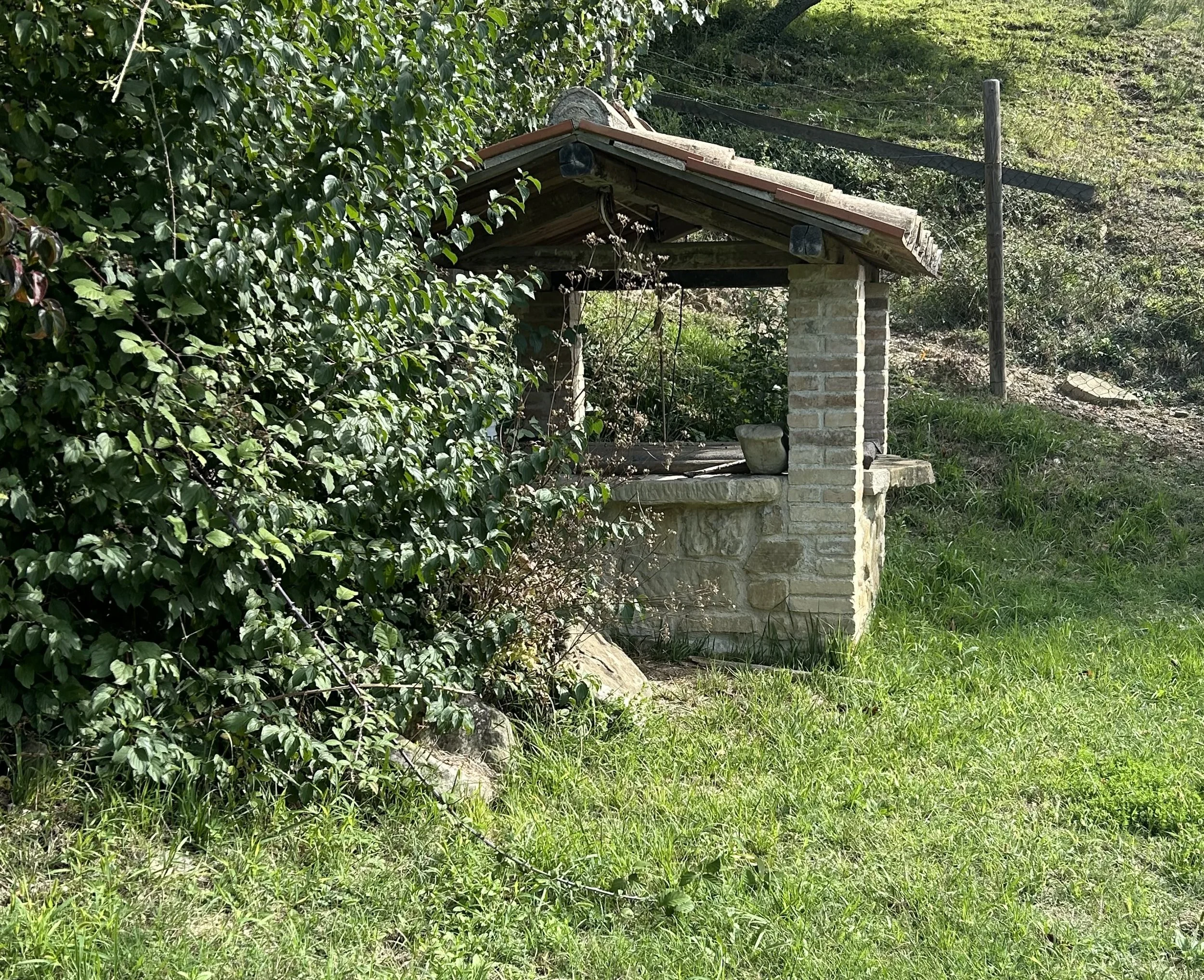
Our well, fed by an underground spring, is just enough to irrigate the gardens
We have a well with which we irrigate most of the gardens. It is drained dry after using but refills overnight. However, we rely on a 52,000 litre cement cistern partially buried in our hillside below the house to provide all our needs in case of a severe drought. Water from the roof is stored in the cistern and is pumped back up to the house using solar power. Ironically, it was far more challenging getting over the hump to just hook up a rain barrel than to take the plunge and acquire a large cistern to supply all our needs. That first step toward relying on ourselves—to take an action toward independence from the grid and the technology—that first step to shortening our own supply chain and protecting the local ecology—was the most important.
Anticipating our needs
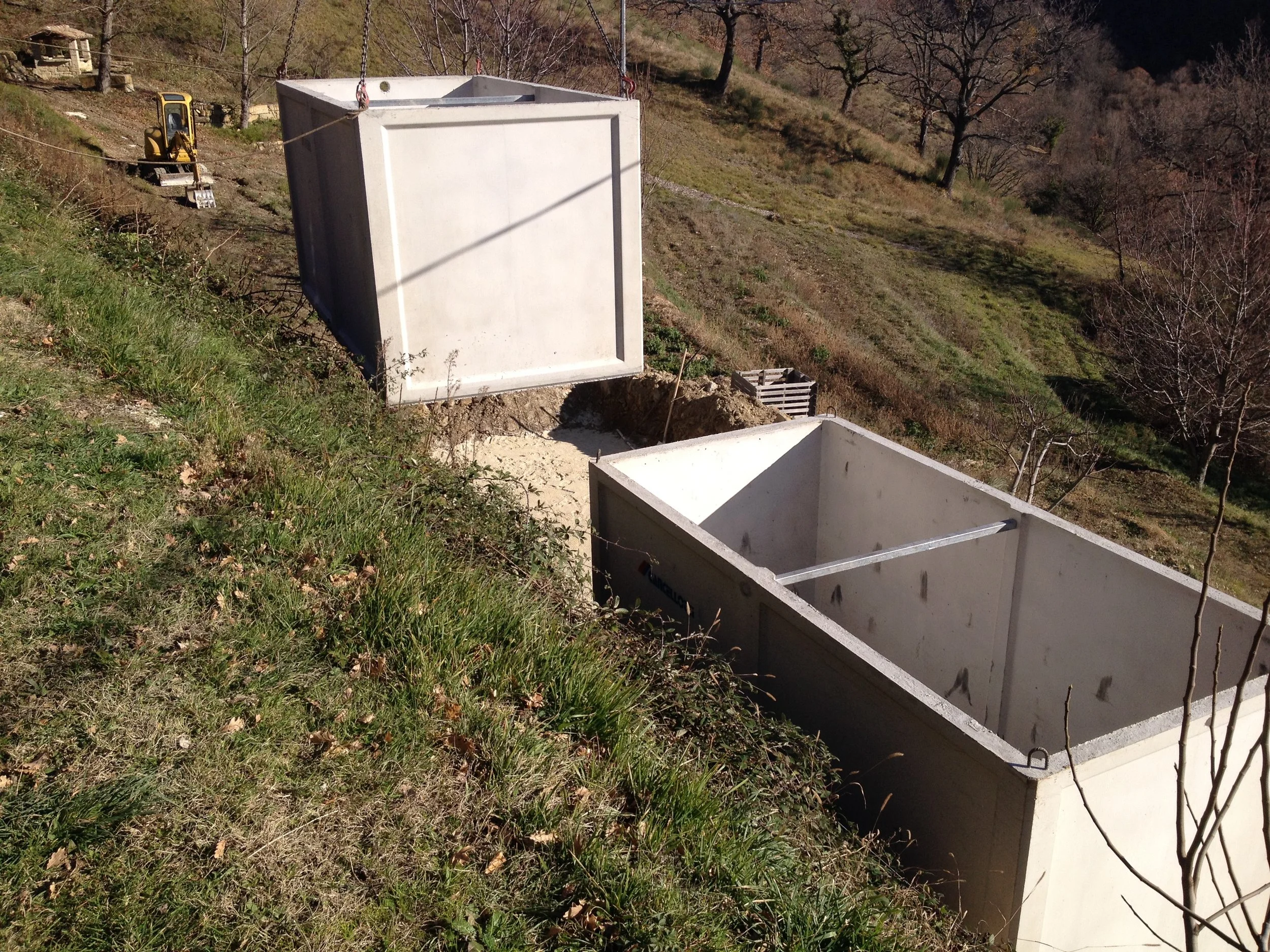
Installing the cistern
Just collecting rain from our rooftops is not quite enough. Anticipating the local weather—learning the local weather patterns, the seasonal variations, informing ourselves using qualified global heating/cooling predictions helped. Beyond that, understanding sanitation and filtration, exploring the best surfaces for collection, and researching water storage containers are equally important. It can't be written about in an article or even in a number of articles. And it can't be written on someone's blog. There is no “one-size-fits-all.” It requires research into the specific region, one's budget and available space. However, whatever one spends for water containment is made up in a few months to a few years on savings on water bills. In Europe there are grants from the EU for alternative technologies. For specific containers and creative installation I relied on the local services in my area—most important were my neighbors who already had cisterns, then the proprietor of the lumbar yard, the hardware store, the carpenter, the metal workers, and what a plumber could and would do. I divorced Mr. Amazon several years ago. I want the advice of the local experts; I want to support them in their work, help keep them in business. They know the local materials and the local contaminants. Whether to get a wood rain barrel or a stainless steel tank or a cement cistern depends on one's needs combined with what is already working well for the locals.
(Because we have a farm and have a fair amount of irrigating needs in the summer time, we had a concrete tank built into our hillside. It was recommended by the local builder who felt it was the best choice for large containment in our climate. But for our children next door we are installing two large (5,000 litre) stainless steel tanks which make more sense for their needs and their space.)
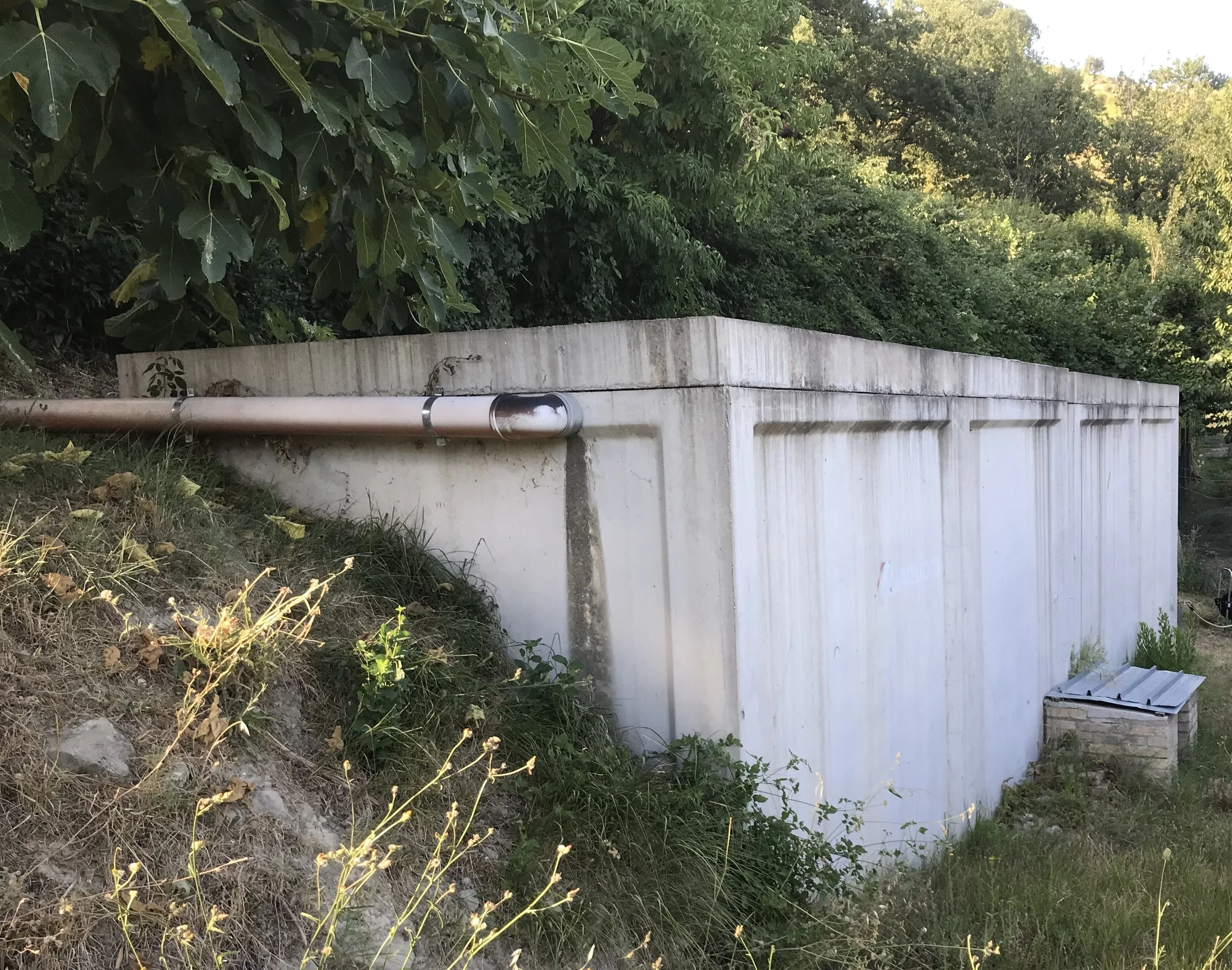
The cistern installed
Filtering rainwater
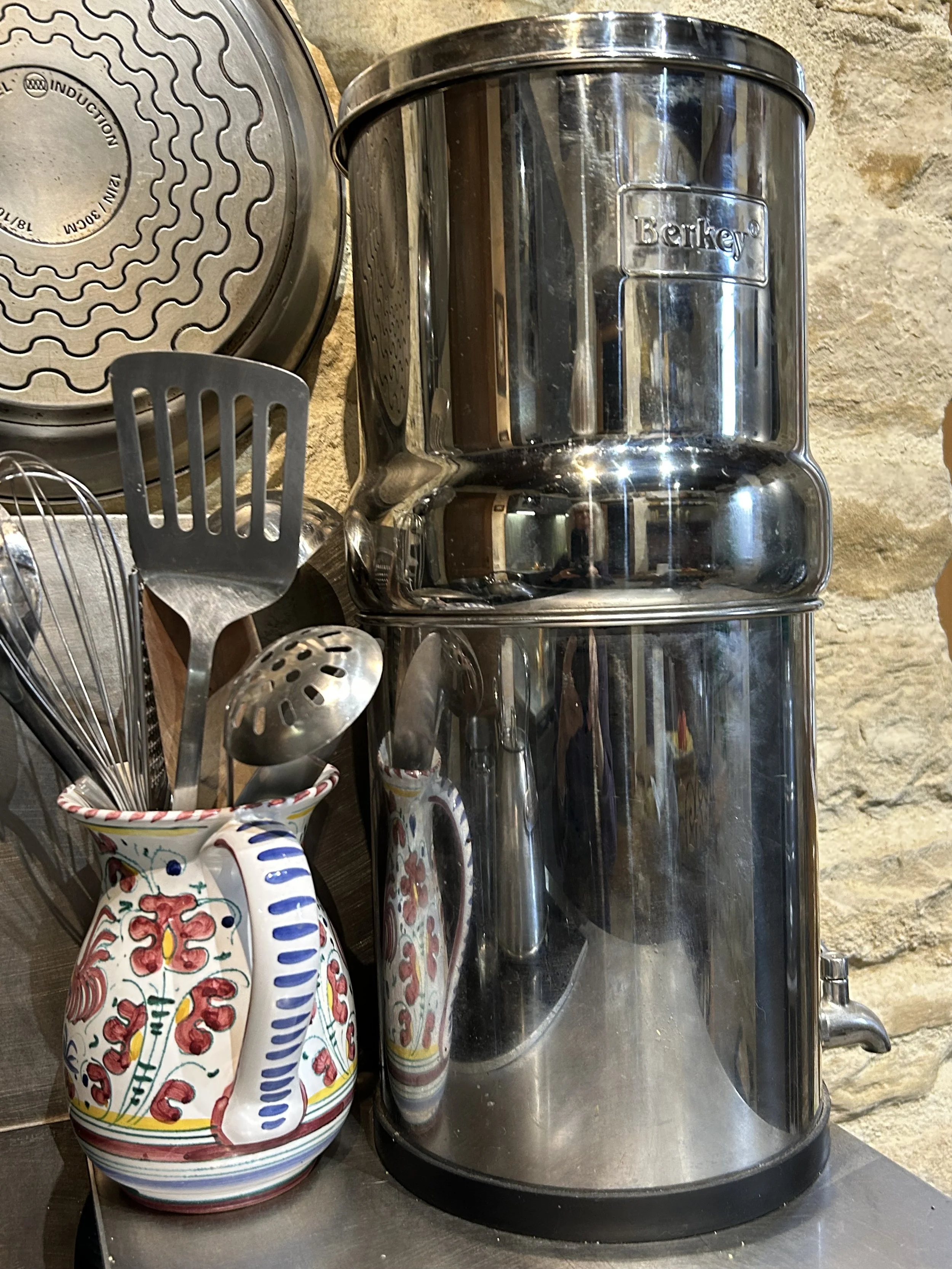
Filtration for optimal water quality is also a necessity. That too is best decided based on local conditions. Rainwater contains whatever may be in the immediate atmosphere. I test the water in the cistern and well and will boil it if there is a reason. There is a simple mesh filter to catch the leaves and debris before the roof water enters the pipe. But for all our drinking water I rely on a large ceramic container with a .5 micron carbon filter. (.5 micros is the pore size of the filter. This is very very small and means that almost all particles are trapped inside the filter. We change the filter every six months. As it is ceramic and carbon, it can be smashed and recycled on the land.) There are numerous other filtration possibilities but we were looking for low-tech. Any large hardware store sells stainless steel water filters.
Community support
Capturing rainwater is a perfect example of where community support can be helpful. (I write the following a lot. I cannot emphasize it enough.) I want the wisdom of my neighbors, the people who have lived in my area far longer than I. I knew nothing of the weather patterns, the storms and flooding. I knew none of my options for rainwater collection; what might be best for this area, for my needs as a family and a farmer. I hadn't a clue where to find the materials. My immediate neighbor guided me through all of it. Another neighbor knew how to test the water. And our long time plumber oversaw the installation in the house. He also suggested two stainless steel holding tanks for water inside the house, 1500 litres each. Backup... just in case something went wrong with our system. We have since added a cistern off the barn and another off the tool shed. Because the water pump is in the field below the house, anything might go wrong. It would be a long slog to haul buckets of water uphill, not just for our needs but for irrigation. And so we also have a hand pump.
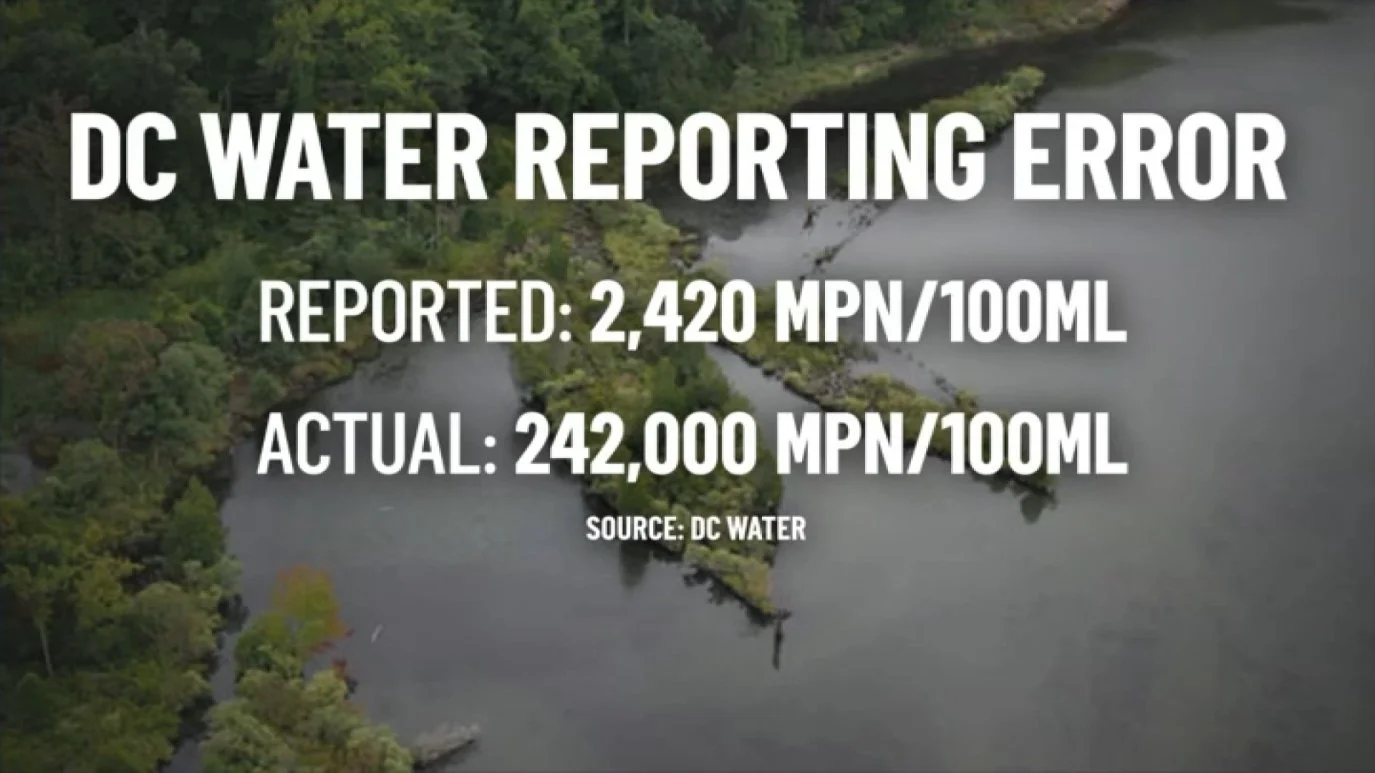
Graphic from article at NBCWashington.com: “E. coli levels are about 100 times higher than DC Water initially reported.”
It's time to prepare
If collecting your own rainwater sounds extreme or premature, I would forcefully disagree. What we are experiencing now is just the beginning of the collapse of the climate system as we knew it. Even if we were to cut our greenhouse gas emissions to zero right now it will take hundreds of years for the atmosphere to equilibrate to where it was post WWII. We are no longer just talking about the continuing increase of carbon dioxide and nitrous oxide in our atmosphere but the release of more methane, which traps far more heat than CO2. Old bursting water pipes, flooding, intense and increasing heat waves and drought will only become more common. Perhaps western Europe and eastern North America will see an ice age. (And I won't even touch economic collapse.) Water is an essential need; we cannot do without it; even lab-grown food relies on water. Whether or not we believe our governments must provide basic services, I question whether they can given our current world. There are simpler, healthier paths we can take. It is time to examine how we live, where we live, where we draw the line. We can take our anxiety and move it into action. We can plan and protect ourselves. And, amazingly, wonderfully, saving rainwater is something every one of us can do.
It's time.
© www.thesubversivefarmer.net March 17, 2026
In a previous lifetime, Zia Gallina worked as a botanist for the National Parks Service and was professor of biology and environmental science at American University, Washington D.C. But she has always been a champion of small-scale biointensive farming, tagging behind Mother Nature, trying to stay as close as she can get.