PERMANENT AGRICULTURE <em> PART I: TREE CROPS</em>
I have just finished re-reading an old book; a book with some truly wonderful suggestions about regenerative farming and enhancing the resilience of the land, while ignoring some basic principles of sustainability as well as the integrity of our ecosystems. And yet, in spite of the author's misplaced trust in science, economics, and technology to lead the way, there are enough ways in which the book is instructive that it is worth discussing.
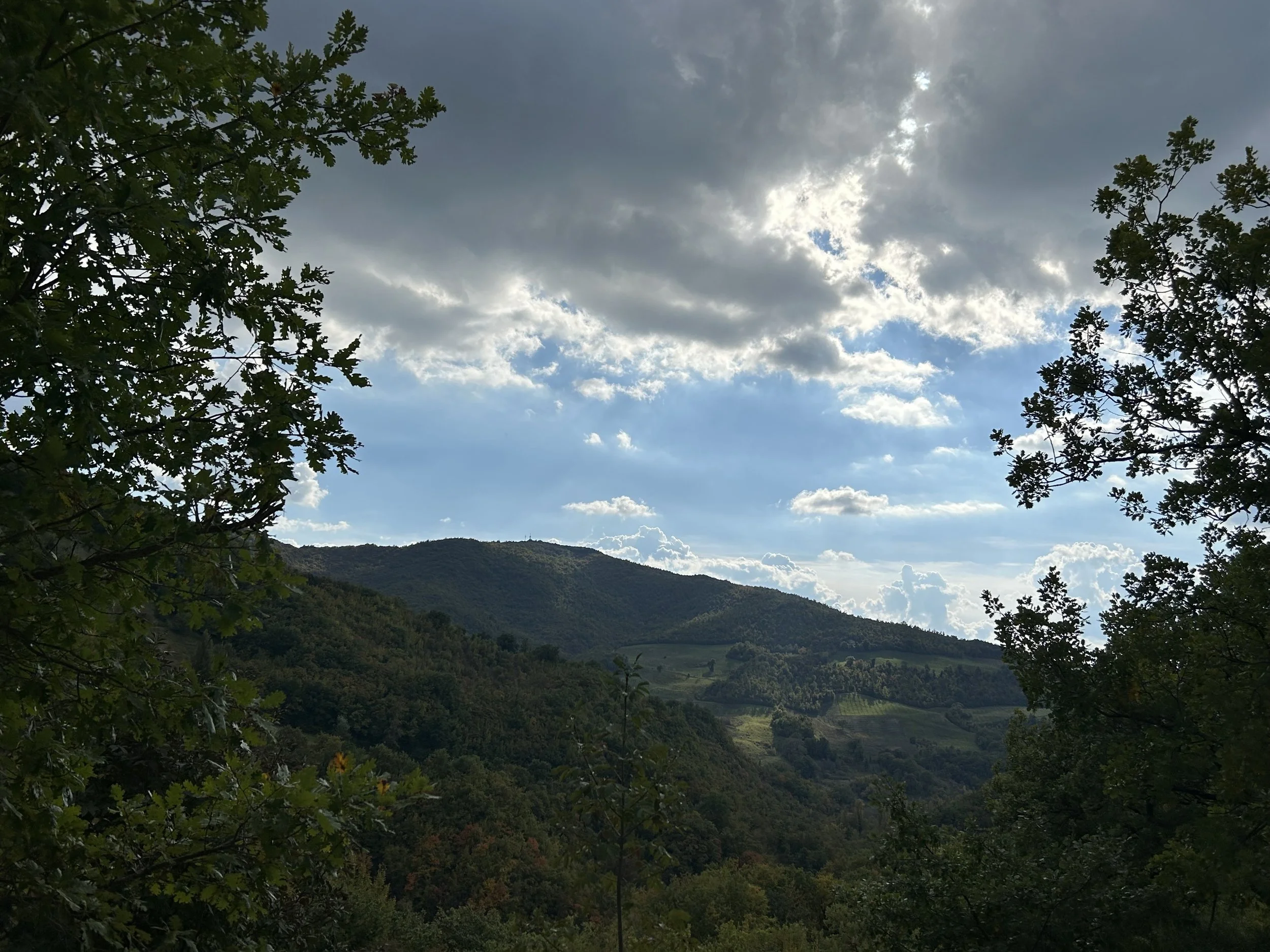
Fifty years before Bill Mollison and David Holmgren coined the term permaculture, Joseph Russel Smith wrote the book Tree Crops, a Permanent Agriculture (1929). A geographer and a university professor, Smith witnessed the destruction of American soil primarily from plowing up fields to sow an annual monoculture. He was particularly focused on the hill country where tilled crops from the plains—corn, cotton, and tobacco—were destroying the land. His travels abroad inspired an idea for using perennial tree crops in the hills for both food and erosion control.
“Across the valley (in Corsica) I saw a mountainside clothed in chestnut trees. The trees reached up the mountain to the place where coolness stopped their growth; they extended down the mountain to the place where it was too dry for trees...The expanse of broad-topped, fruitful trees was interspersed with a string of villages of stone houses...The mountainside was uneroded, intact, and capable of continuing indefinitely its support for the generations...” Joseph Russel Smith.
Fast forward to the present day where the once vibrantly alive, fertile soil communities of our vast megafarm fields have been turned to dead dirt by machines and fertilizers and the continual assault of annual crops. Smith's theory of utilizing tree crops—perennial bean, nut, and fruit trees which build the soil community rather than destroying it—is way overdue. Vertical farming... a sustainable agriculture to feed all.
The first nineteen pages of Tree Crops had—and still has—revolutionary ideas. They are the reason Mollison and Holmgren went fishing around in Smith's book. They mined Smith's major points, embellished them with complexity and design principles, and wisely dumped the remainder. Smith's analysis of the problem was correct. Even his general solution of planting trees was inspired. However, the specifics were typical of our short range, anthropocentric thinking. The bulk of the book is ignorant of the extreme importance of the natural world (it was written almost one hundred years ago) as well as elitist, though Smith's descriptions of various tree crops are still oddly interesting. Most of the book is a complex idea to import trees to America, creating experimental farms and institutes for breeding hybrids. The point of view is devoid of any concept of land stewardship or respect for the natural world. The major flaw in J. Russel Smith's dream of transplanting and tinkering, is that it is prohibitively expensive, monetarily and environmentally.
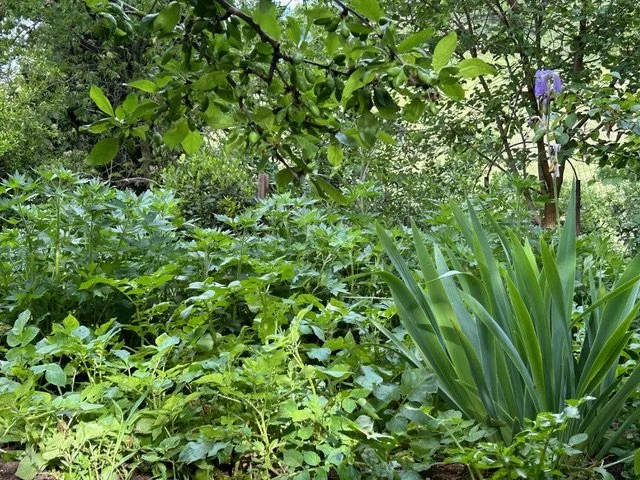
However, his core motivations are still relevant. “Man lives by plants. Plants live in the soil. The soil is a kind of factory in which the life force of plants, using plant food from earth, air, and water, and assisted by bacteria and the elements of the weather, changes these natural elements into forms that we can eat and wear, manufacture and burn, or use for building material... In order for humans to know how to use the land of a particular locality, they must look to see how nature uses it.”
Smith's main ideas were for the hill country but they are pertinent for the plains too. To summarize:
#1 Smith believed that agriculture must be adapted to the physical conditions of the area. But when he wrote that farming should fit the land he meant the crops for the plains were not suited for the hills. The steeper the land, the worse it is served by annuals. There is no disruption to the land with perennials, no plowing, therefore no erosion. Smith called his system 'permanent agriculture'; growing productive fruit, nut and legume trees primarily on hillsides. “The crop-yielding tree offers the best medium for extending agriculture to hills, to steep places, to rocky places, and to the lands where rainfall is deficient. Man has carried to the hills the agriculture of the flat plain. In hilly places man has planted crops that need the plow; and when a plow does its work at an angle instead of on flat lands, we may look for trouble when rain falls... Testing applied to the plant kingdom would show that the natural engines of food production for hill lands are not wheat and other grasses, but trees... These wonders of automatic production are the chance wild trees of nature…”
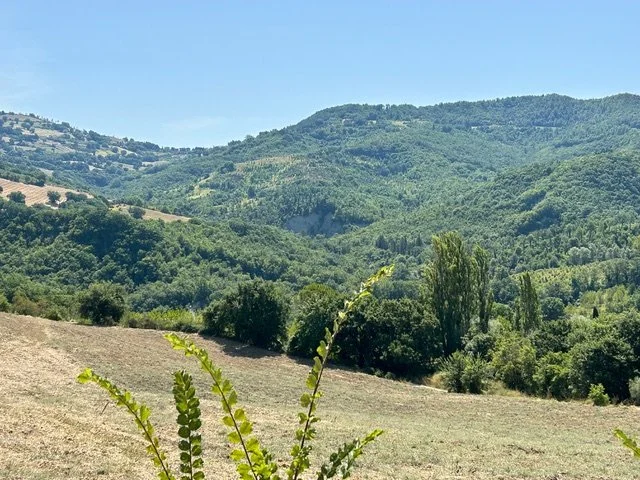
#2 Smith saw erosion as the major problem facing American agriculture with crop trees the answer. The way annual crops were (and still are) grown left the soil exposed to erosion after the harvest. “Where man has removed nature's protecting cover of plants and plant roots, the destroying power of rain is increased a hundredfold...” Smith believed that the way the major crops were cultivated in North America—the corn, tobacco, potatoes, and cotton—was destroying the soil. The plow and then the tractor, in tandem with an annual monoculture, had turned living soil to dry dirt, which eroded or was blown away. The destruction was worse in the hill country where erosion was inevitable once the top soil was disturbed by seasonal ploughing. Trees which develop deep taproots first then branch off to massive lateral roots are ideal to stabilize the soil when there is heavy rainfall, preventing erosion in woodland and forested areas, particularly in mountainous regions.
“The farmers of a past generation (had) cleared the forest. They had plowed the sloping land and dotted it with hamlets... Year by year the rain has washed away the loosened soil...Only gullies remain—a wide and sickening expanse of gullies, more sickening to look upon than the ruins of fire... Forest—field—plow—desert—that is the cycle of the hills under most plow agricultures...“
Any large tree when planted to the windy side of the crops becomes a natural windblock. Trees stabilize both flat land and hillside, increasing in importance slope increases. They provide flood control. They are a water and nutrient reservoir for the surrounding ecosystem. Once etablished, many tree species are particularly resistent to both drought and fire. Where roads have been cut deep into hillside, trees as well as plentiful ground cover are essential. The more trees and plants beneath them, the better.
And this is being demonstrated currently using modern methods. The following is from Nature: “We found strong evidence to support our overarching hypothesis—an increase in plant abundance reduces erosion. We also found support for the specific hypotheses that plant roots bind soil particles and that greater plant stem density and leaf area reduce surface run-off and promote sediment deposition.”
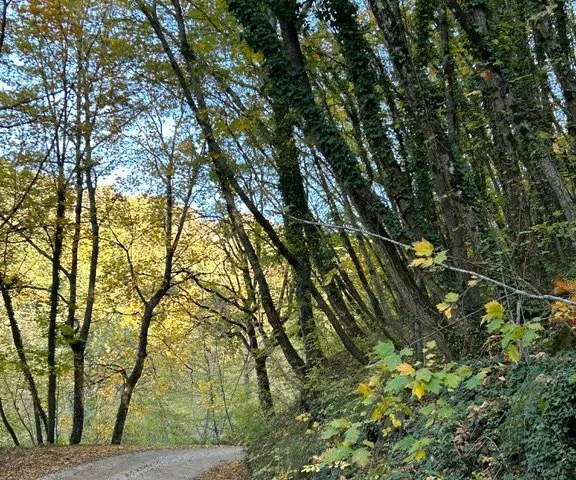
#3 Smith encouraged using productive fruit, nut and bean trees on hillsides. “A given area may have rich soil and good climatic conditions, but be unsuitable for grain if the land happens to be rocky. Nor are steep lands good farm lands for grains. Trees are the natural crop plants for all such places. Trees can store moisture much better than the annuals can store it, because they thrust their roots deep into the earth, seeking moisture far below the surface...They are able to survive drought better than the annual crops that grow beside them... Therefore, the crop-yielding tree offers the best medium for extending agriculture to hills, to steep places, to rocky places, and to the lands where rainfall is deficient.”
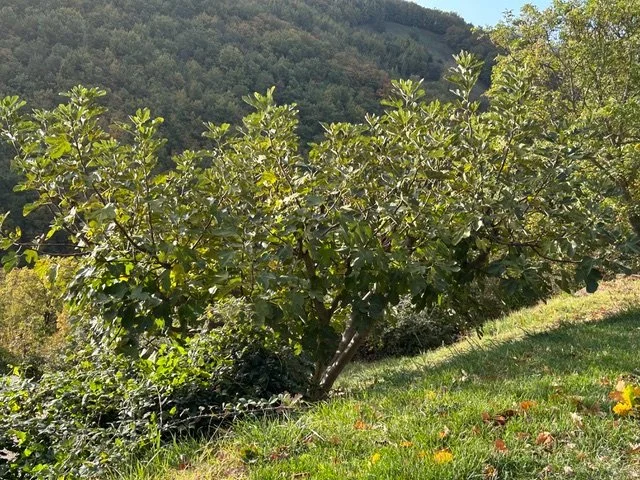
Fig trees on the hillside with blackberries beneath
#4 Toward the end of the book, Smith mentions how to start a tree farm. “Begin gradually. One thing this book is most emphatically not: it is not a recommendation to the business interests of the United States to plant out a large tract of any crop-yielding tree. He suggests that an intelligent farmer can start experimenting with trees with no element of additional overhead— no purchase price of land, special tools, or anything but the trees themselves and the few things that may be directly used with the trees. Smith briefly mentions a critical point for any sustainable farmer...interplanting of different tree species... to provide early returns quick-maturing species can be alternated with slow-maturing. “
And #5—inspired and most important—he suggests that “the development of two-story agriculture (trees above and annual crops below) offers interesting possibilities of a greater yield than can be had from a one-story agriculture.” There is immense logic with using both vertical and horizontal crops, in particular when both are perennial on steep inclines. “The unplowed lands are partly shaded by cropping trees—mulberries, persimmons, honey locust, grafted black walnut... and other harvest-yielding trees. There is better grass beneath these trees than covers the hills today.“
This is a treed version of a perennial polyculture. It is an answer to the most challenging problem in agriculture: how to get more food from the existing agricultural land without emissions, without depleting or eroding the soil. Without machines, with manual seeding and harvesting the areas in between the trees, there is no soil compaction... and no hefty mortgage to pay for the tractor.
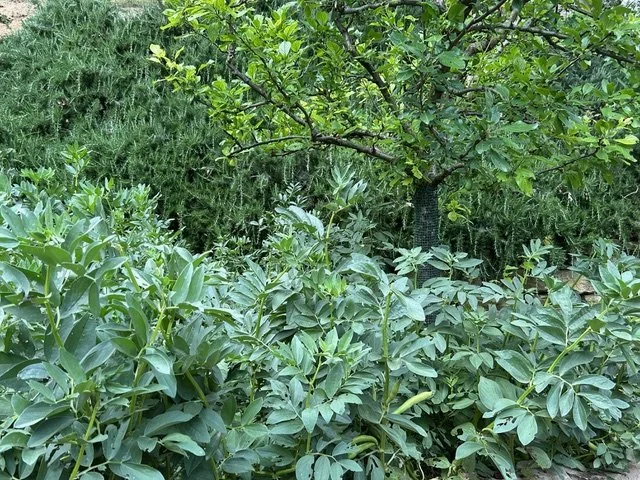
Beyond these carefully observed ideas, from page 20 onward, much of Tree Crops provides an informative historical perspective of the mind set which got us into the mess we are in and the arguments we are up against while trying to preserve biodiversity, our soils, and our natural forested land. (Updated in 1953, Tree Crops is still being reprinted.) In a ponderous contradiction of his own main thesis that farming should fit the land, Smith says that trees are to serve mankind and outlines intensive programs to do so. He asks “what might happen if every wild crop-bearing tree was improved to its maximum efficiency?” His enthusiasm for unsustainable practices—relocating trees to non-indigenous habitats, insecticides, mined fertilizers, intensive scientific manipulation... hasn't worked so well.
“Must we continue to depend primarily upon the type of agriculture handed to us by primitive woman? (What? Hey, she is my role model!) And later... Here is a chance for a 'man of wealth' (my quotes) to have some fun and at the same time to make a world reputation that will last and will increase for generations because of the great service he will have rendered to the world by creating crop trees and a tree-crop agriculture. We need a new profession, that of the botanical engineer, which will utilize the vital forces of plants to create new mechanisms (crop yielding trees) as electrical and mechanical engineers use the forces of electricity and the elements of mechanics to create new mechanisms for the service of mankind.“
Remind you of anyone in particular?
Feeding the world is a complex issue. Global hunger isn't about a lack of food. It is about unlimited population and limited resources. But currently, the world produces more than enough food to nourish every single person. Though the statistics differ, between thirty to forty percent of all the food produced in the world is wasted between the farm and the kitchen... before it can be consumed. (United Nations, USDA, FDA)
However, a vertical and horizontal perennial polyculture—as suggested by Smith—will produce more food while preventing erosion and nurturing the entire soil community. Perennial tree crops above as well as herbaceous crops below. Planting productive trees with wild grasses, grains or herbs underneath—all plants which will self-seed—makes sense, especially where the land can be grazed by animals after harvesting the trees. No fertilizing necessary. Where no animals will be grazing, it is possible to plant annual crops without disturbing the soil. With no plowing, there is no soil compaction from the use of heavy machinery. It is possible on a smallholding, working directly with the soil. With no tractor, there are no bank mortgage and no carbon emissions. And the trees, the entire two story farm, becomes a habitat, a reservoir of biodiversity, for both domesticated animals and wildlife while producing food for all.
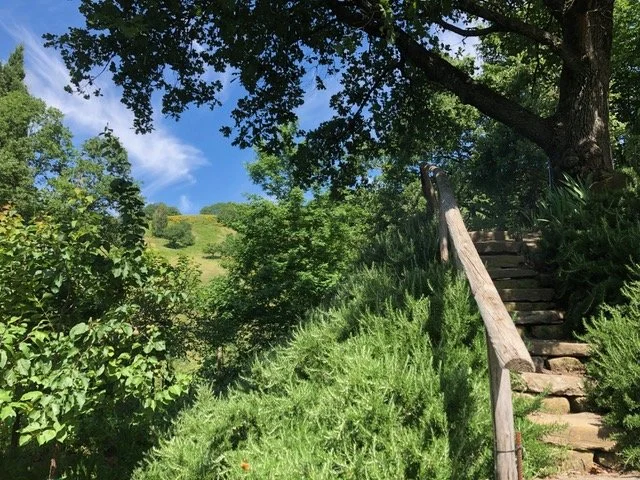
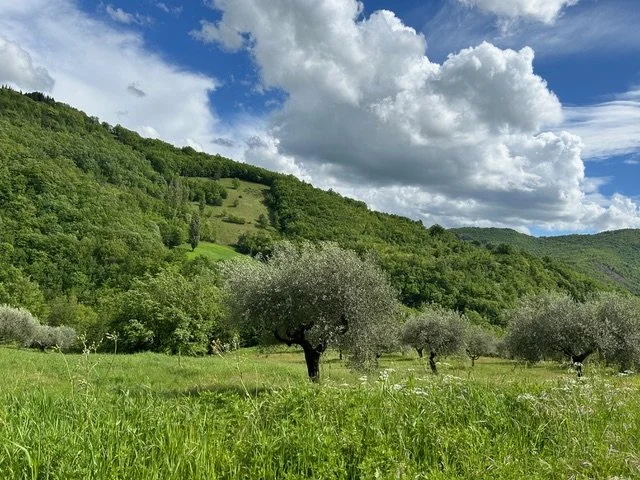
The trees we need to plant must do more than just fit the terrain. They must be the evolutionary success stories, acclimated to the climate, the soil conditions and the increasingly unpredictable seasonal variations, the wildlife, the insects... No one is hybridizing the trees in the forest. In Europe some of our forests have been here for ten thousand years, perhaps much longer, though they are dynamic, always changing. Within the oak tree forests of central Italy, the Umbri (the indigenous peoples) raised wild pigs. Grapes have been cultivated on the hillsides for seven thousand years. The Romans cleared areas and planted olive trees, persimmons, plums, walnuts. Fig trees may have dated back earlier. With extreme wet and dry cycles now as well as hot summers and colder winters, the trees remain numerous, robust, and productive, each generation of offspring having a portion of their population with the mutations to best fit within the changing environment.
When we first saw the land we live on, we walked the whole of the thirteen hectares, learning the major trees, the terrain. We drove to the nearest town observing the canopy trees growing on the neighboring farms as well as the many understory trees and shrubs at the edge of the forest. We saw what the neighbors were growing in their fields, in their gardens. Living on the land the first year, we paid attention to the storms: their ferocity, the direction from which they came, the direction the water flowed when the rain was heavy. We added six cisterns to capture roof water off the barns and the house. Only then did we know where we could plant the first tree crops. And which ones would truly fit the land. Most of the trees survived to bear fruit but only because we had done this before... twice. We had learned from our initial hubris, our total lack of preparation, and many mistakes. We no longer chose trees we wanted to have and placed them where we wanted them to be. We planted only the local species and we planted them where there had been trees. A few at a time. We fitted the trees to the soil pH, the companion plants, the soil depth and structure, in general... the ecosystem. In retrospect, trees we purchased were never quite as productive as the oak, wild cherry, walnut, plum, and persimmon which were on the land for years before we arrived. It is their saplings I save and pot up, their branches I propagate.
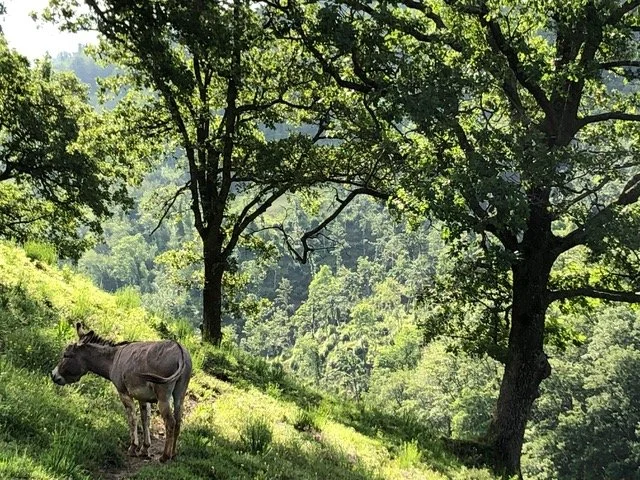
Our donkeys graze on the land; a mix of trees, wild grasses and herbs. We forage there for our wild grains (like amaranth), medicinal plants and our salads. Truffles grow at the base of the oak trees. Wild boar eat the fallen acorns.
Almost one hundred years later, Smith's original ideas for planting a two story agriculture remain inspired—planting crop trees on challenging and depleted land. Trees can do most of the heavy work when it comes to feeding the inhabitants of our planet and repairing our land. Deeply rooted and well established, trees provide food and habitat, regulate the soil ecosystem, as well as water flow and storage, and nutrient dispersal. Trees are the ideal permanent solution “for extending agriculture to the hills, to steep places, to rocky places, and to the lands where rainfall is deficient.” They create a resilience and sustainability which could never be achieved without them.
© www.thesubversivefarmer.net Jan 2026
You can find J. Russel Smith's entire book, Tree Crops; A Permanent Agriculture for free...